Parivas launches Exo.1 additively manufactured luxury watch
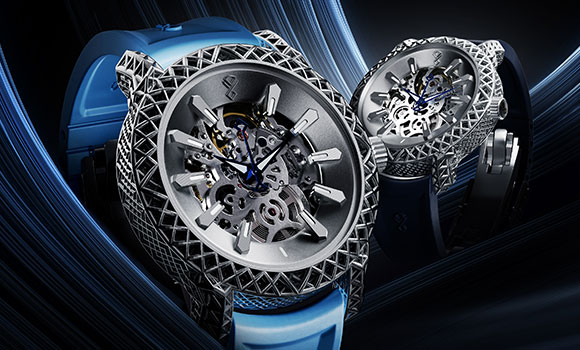
Luxury watchmaker Parivas, based in Los Angeles, California, USA, has launched its additively manufactured Exo.1 model. Constructed as a single monolithic structure, the 316L stainless steel case is made possible entirely through metal Additive Manufacturing.

Under the direction of CEO and lead watch engineer Mickey Brown, and COO and systems
expert Justin Chang, Parivas brings together over 30 years of experience in mechanical
engineering, design, and Additive Manufacturing.
Designed to resemble an exoskeleton, the Exo.1 features a complex structural lattice that extends uninterrupted across the bezel, body, and lugs. By additively manufacturing the watch in a single structure, the interfaces where misalignments and inconsistencies occur in conventional watchmaking can be eliminated.
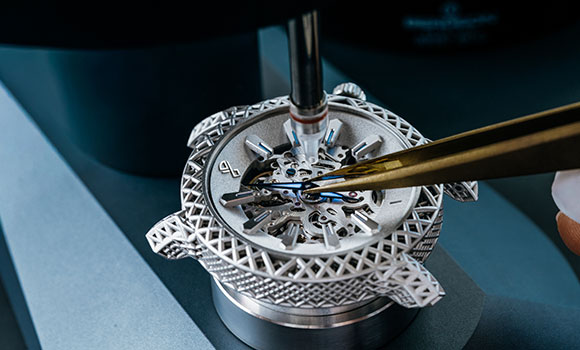
The lattice features floating hour markers, additively manufactured with hollow cores, and embedded tritium tubes. The watch also features a Solar Dusted finish. This is said to be the result of a proprietary sintering process that produces a wave-like, fingerprint-like texture that changes appearance under direct sunlight.
“The Exo.1 is the most integrated case architecture in contemporary horology,” stated Brown. “It is not a design choice made simply for aesthetics. It is the structural result of designing and building in a fundamentally different way.”
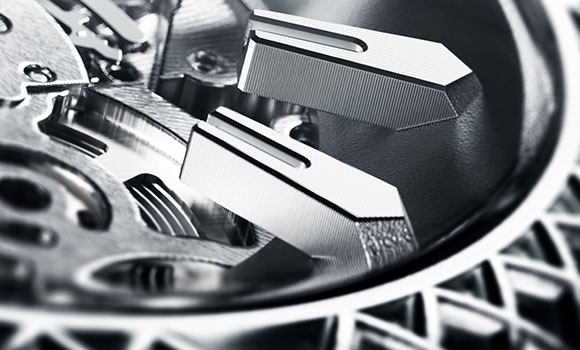
The Exo.1 marks the beginning of the Genesis Collection, the company explains. Parivas collections are defined by a dedicated case geometry and subsequent collections will be established through their own distinct case design.

Powering the Exo.1 is the Parivas Caliber P1001S, a customised Swiss automatic skeleton movement based on Sellita SW300-1SA architecture, finished with rhodium plating and soleillage decoration. It is certified under the Parivas Chronometer standard, an in-house precision programme developed in collaboration with the Horological Society of New York, designed to exceed the requirements of ISO 3159.
The first production batch of the Exo.1 will be limited to thirty, with delivery expected in Q1 2027.