Avimetal ring beam enables Shandong University to achieve support-free overhangs
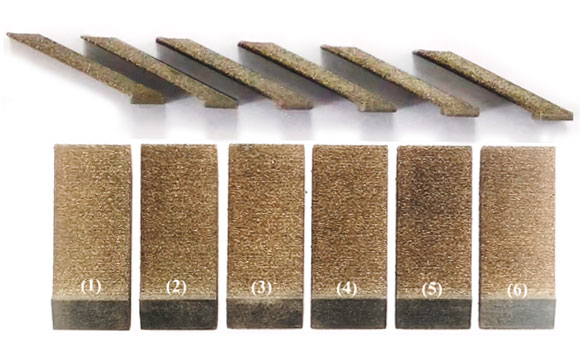
The State Key Laboratory of Advanced Equipment and Technology for Metal Forming at China’s Shandong University’s School of Mechanical Engineering has published a study in the Journal of Materials Research and Technology discussing the achievement of support-free 25° overhanging structures in Laser Beam Powder Bed Fusion (PBF-LB) Additive Manufacturing. The process uses a ring-shaped laser beam technology supplied by Avimetal, a subsidiary of Jingcheng Electromechanical, based in Beijing, China.
The method is said to offer a new approach for integrated, support-free manufacturing of low-angle overhang structures such as aeroengine combustion chambers and turbine blades.
The research was conducted with an MT280 ring beam technology, along with IN718 nickel-based superalloy powder, also supplied by Avimetal.
The low-angle overhang challenge in conventional PBF-LB
While PBF-LB enables rapid fabrication of complex parts, conventional gaussian-beam processes require support structures for overhangs below 45° to prevent thermal deformation and warping, the researchers stated.
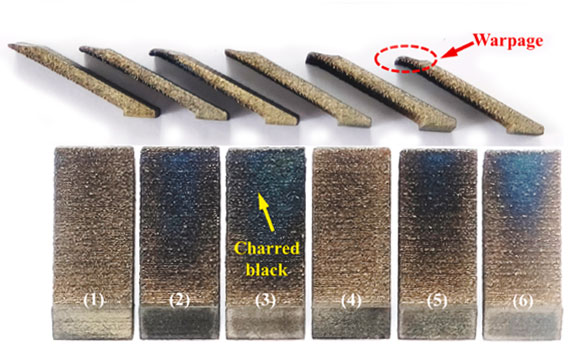
For complex internal cavities or batch production, support removal and post-processing significantly increase time and cost which can limit PBF-LB design freedom and industrial adoption.
The research team reported successfully achieving support-free fabrication of 25° overhang structures in IN718 alloy. The work systematically compared the effects of gaussian and ring beam shapes on overhang quality.
Core results
- Processability: The ring beam reportedly demonstrated excellent PBF-LB processability, producing fully dense IN718 parts across a wide process window.
- Mechanical Properties: Samples fabricated using the ring beam eexhibited comparable tensile properties at both 25°C and 650°C.
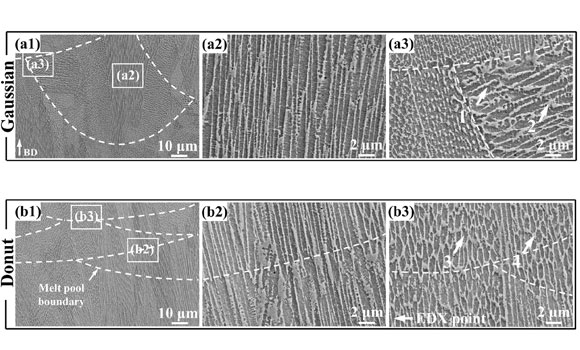
- Microstructure: Ring-beam-fabricated IN718 showed elongated grains with significantly higher texture index.
- Forming Accuracy: Support-free 25° overhang samples achieved top-surface deformation of only 0.18mm; Gaussian beam samples failed due to severe warping, with some exhibiting angular deviations up to 8°.
Avimetal’s MT280 ring beam technology
The research utilised Avimetal’s MT280 PBF-LB metal AM machine with a build volume of 265 × 265 × 400 mm, featuring a 500 W dual-laser system and an adjustable beam shaping module. After beam shaping, the laser profile presents a distinct ring-shaped energy distribution with a diameter of 167 μm, providing a stable platform for this research.
To further improve forming consistency and part quality, the MT280 now features an adaptive point-ring beam energy control system supporting seamless dynamic switching between Gaussian, ring, and point-ring beam modes.
IN718 superalloy powder
The IN718 nickel-based superalloy powder used in this study features uniform composition and controlled particle size distribution, with D10, D50, and D90 values of 19.38, 32.44, and 52.59 μm respectively. Material samples reportedly demonstrated excellent mechanical properties at both 25 °C and 650 °C, achieving over 99% density, supporting the production of high-density samples with low defect levels and a uniform microstructure. providing a solid material foundation for high-density, low-defect, uniform microstructure samples.
Industry-research collaboration
Avimetal said it is committed to advancing metal AM innovation as it continues to deepen integration between industry and research. The company has provided equipment and material support for numerous research projects at Shandong University, Zhejiang University, and other institutions, while engaging in multi-field collaborative innovation.
The full study is available here.
School of Mechanical Engineering