amsight calls for stronger SPC adoption in metal AM
In a recent report, Tim Wischeropp, CEO and Co-Founder of amsight GmbH, Hamburg, Germany, has shared insights on Additive Manufacturing and Statistical Process Control (SPC), stating that it is one discipline that AM needs to embrace more aggressively in production.

“SPC is not glamorous, and that is kind of the point. It’s how mature manufacturing stops reacting to defects and starts controlling variation,” Wischeropp stated. ”It’s how you detect drift early, quantify stability, and improve processes based on evidence (not intuition and emergency meetings).”
In AM, SPC becomes powerful when the data isn’t trapped in silos, explained Wischeropp. When powder lots, builds, machine events, post-processing steps and inspection results are connected at part level, SPC stops being a quarterly analytics exercise and becomes a daily operating rhythm.
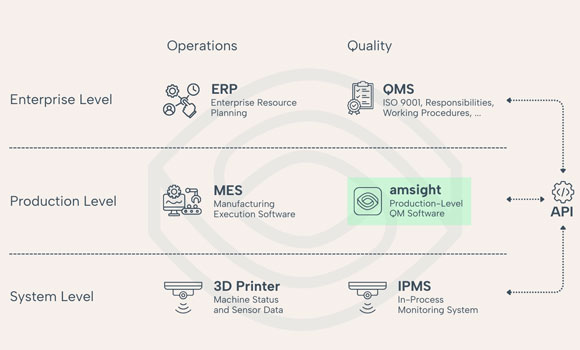
“In amsight we use a phrase that captures the shift, digital quality backbone,” Wischeropp added. “What we mean is simple. Production-level quality software that connects powder, process, and inspection data into one structured, reusable asset, so traceability, compliance reporting, SPC, and root-cause analysis stop being manual heroics.”
“Through our Production Monitoring, we facilitate the practical outcome: “catch problems before they become scrap,” with live KPIs, built-in SPC, and root-cause analysis in minutes,” Wischeropp continued.
Wischeropp also stated that in Reports & Analytics, the message is: stop rebuilding reports from scratch; define templates once and generate them anytime, with analytics built in. This is not about replacing ERP or MES. It is intended to focus on owning the production-level quality data model for AM.
Wischeropp claims that a quality backbone is not only about compliance, but it is also about competitiveness. When your AM quality data is structured:
- audits become faster and less disruptive,
- scrap reduction becomes systematic, not accidental,
- qualification moves from a painful ritual to a repeatable process,
- and scaling from five machines to fifty becomes a matter of expanding a system, not expanding chaos.
“In high-stakes sectors (space, aerospace, medical, semiconductor supply chains) this is the difference between “AM is interesting” and “AM is dependable.” And dependability is what unlocks volume,” Wischeropp concluded.