BLT boosts rocket engine cooling with copper AM thrust chamber
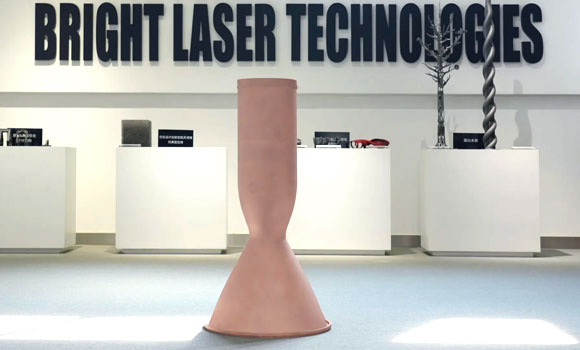
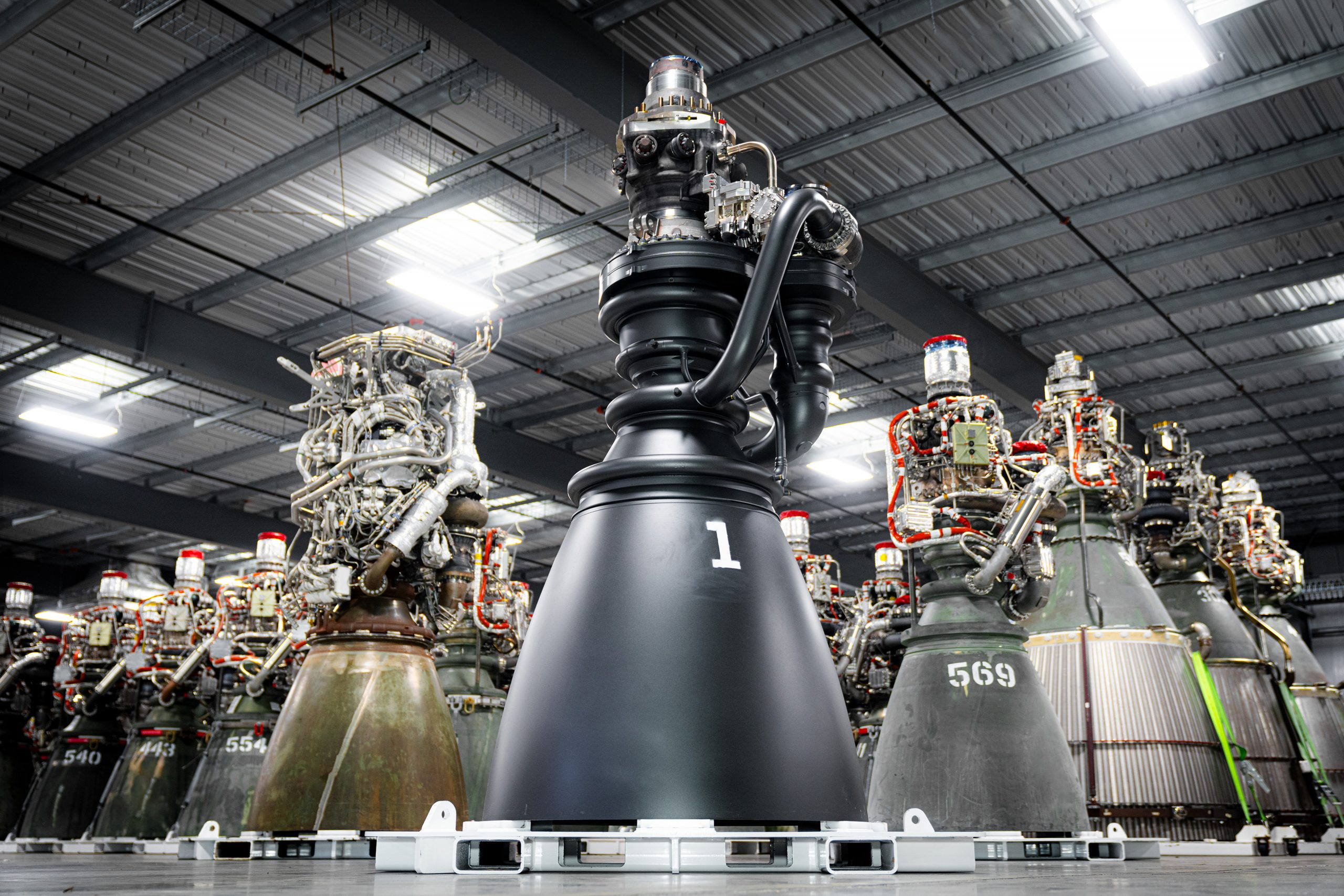
Xi’an Bright Laser Technologies Co., Ltd (BLT), China, has developed and additively manufactured a copper inner wall liner for the thrust chamber of a rocket engine. Using its metal Laser Beam Powder Bed Fusion (PBF-LB), technology, BLT was able to overcome issues presented by traditional manufacturing by free forming the complex structures. The six-laser BLT-S615 PBF-LB AM machine built the copper inner wall, measuring φ502 × 946 mm and weighing 35 kg.
The part was produced from high-performance copper chromium zirconium (CuCrZr) powder, a precipitation-hardened copper alloy with a micro-alloyed copper matrix. This material is said to retain the good thermal conductivity of pure copper at improved strength and hardness, along with good high-temperature deformation resistance and corrosion resistance.
This combination of properties enables the thrust chamber’s inner wall to achieve efficient heat dissipation while maintaining structural integrity and stability under extreme service conditions of high temperature and high pressure, thereby enabling long-term reliable operation.
Cooling channels
The rocket engine thrust chambers perform the critical function of converting the thermal energy of high-temperature gas into kinetic energy to provide thrust for flight. Its performance directly determines the engine’s operational capability and reliability. According to BLT, traditional manufacturing methods are limited by processing techniques and can struggle to create complex cooling channels, thus making it difficult to construct complex, intricate conformal cooling channels inside components or improve their efficiency.
The complex internal cooling channels additively manufactured within the thrust chamber are said to increase the heat exchange area and enable the uniform flow of coolant throughout the passages, thereby preventing localised overheating. BLT stated that its design of the complex flow channel structures can significantly enhance the engine’s cooling efficiency and extend its service life, providing an effective solution for heat dissipation challenges in high-thrust liquid rocket engine combustion chambers.
BLT also noted that integrating the cooling channels with the inner wall in a single Additive Manufacturing process also eliminated the need for traditional welding.