Metalysis expands capacity to meet critical material demand
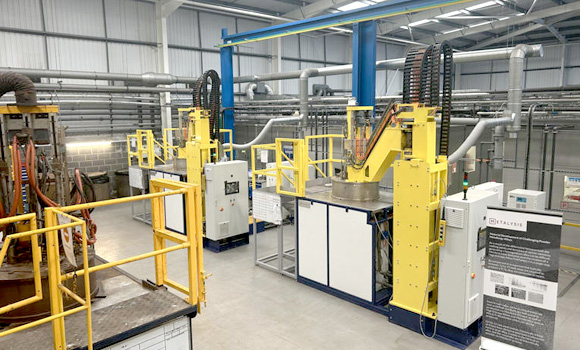
Metalysis, based in Rotherham, UK, reports it has added two more Gen 2 demonstration units, doubling its capacity to meet increased demand from advanced industries, including electronics, hypersonics, defence, clean energy and space. The new Gen 2 units are housed at the Metalysis Discovery Centre in South Yorkshire.
The expansion supports customers developing next-generation materials and is said to reflect the heightened urgency to secure non-Chinese midstream processing options following ongoing uncertainties surrounding new Chinese export controls on critical minerals and rare earth elements.
“We are delighted to be doubling our Gen 2 units, just seven months after we increased our Gen 1 capacity by 1/3,” stated Nitesh Shah, CEO of Metalysis. “We are seeing increasing demand for our products at the Gen 2 level, sending material to clients for evaluation and qualification into specialist markets, with particular interest from sputtering target manufacturers.”
At the heart of Metalysis’ capability is the patented Metalysis FFC Cambridge electrolysis process, which reduces metal oxides to pure metal or alloy powders in the solid state, using a calcium chloride electrolyte at moderate temperatures, between 650–950 °C. The metal oxide acts as the cathode, and when a voltage is applied between it and the anode, which is typically carbon, oxygen is released from the metal oxide. The oxygen moves toward the anode, leaving a porous metal structure, or metal sponge. The sponge is then crushed, milled, and dried to create a powder. Variations in the anode material are possible depending on the off-gassing being produced.
This process consumes less energy compared to traditional high-temperature melting, avoids hazardous chemicals, and enables precise control over material chemical and physical properties. Unlike multi-stage methods, such as those used in titanium alloy production, the Metalysis process is single-stage, resulting in higher yields, improved efficiency, and a more sustainable manufacturing footprint.
The Gen system provides a scalable platform, from gram-scale R&D (Gen 1) to kilogram-scale demonstration (Gen 2), commercial (Gen 3), and industrial-scale (Gen 4) production. The process is agnostic to oxide composition. As a result, the Gen units are not constrained by product type, allowing Metalysis to support a wide variety of customer applications using the same core technology.
This ability to create unique physical and chemical attributes has seen Metalysis emerge as a global partner to the advanced electronics sectors, semiconductors and capacitors, clean energy, aerospace, hypersonics, space and other advanced manufacturing verticals that require specific novel and innovative materials. These are applications where traditional manufacturers struggle due to inherent limitations in their production processes.
“A range of advanced manufacturing sectors come to Metalysis because of our core suite of products – capacitor grade tantalum, scandium tri-aluminide (Al3Sc), niobium alloys and our ability to create lightweight refractory high entropy alloys, and because clients know that with all the materials that we produce we bring unique and bespoke physical and chemical attributes to the end-material, meaning we are without competition across a range of products. The recent REE controls by the Chinese have accelerated this process as clients require metal feedstocks and midstream processing from outside of China, and this will be the dominant trend across critical materials over the next few years,” concluded Shah.