Scandium Canada reports crack-resistant Al-Sc alloys for Additive Manufacturing
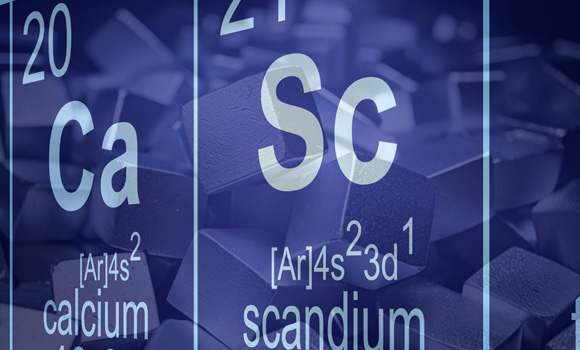
Scandium Canada Ltd, headquartered in Montreal, has reported new data on its modified AA535 and AA7075 aluminium-scandium (Al-Sc) alloys. When processed via Laser Beam Powder Bed Fusion (PBF-LB), these alloys effectively eliminate cracking that can occur when additively manufacturing high-strength aluminium alloys. This breakthrough is said to pave the way for lightweight, high-performance, and cost-effective components across multiple industries.
The company also announced the establishment of its Scandium+ division, created to ramp up the company’s commercialisation efforts for these two Al-Sc powders. The new division will also focus on the research and development of other Al-Sc alloys and aims to unlock the full potential of scandium through strategic partnerships, cutting-edge technology, and a commitment to responsible stewardship.
“Scandium Canada’s proprietary alloys directly address the critical need for printable, high-strength, and lightweight metals in sectors such as aerospace, automotive, and advanced manufacturing,” stated Dr Luc Duchesne, Head of Scandium+ division and Chief Science Officer. “This advancement is expected to accelerate the transition to lightweight structures in critical applications, supporting global efforts toward sustainability, energy efficiency, and improved engineering design.”
Scandium Canada’s AA535 and AA7075 alloys feature less scandium than traditional Al-Sc in an effort to directly address the cost and resource sustainability issues of this alloy class. The alloy’s proprietary blending procedure, utilising zirconium dihydride (ZrH2), is said to help reduce the formation of microcracks during the PBF-LB Additive Manufacturing process.
The company added that the alloys exhibit suitability for Additive Manufacturing across a range of laser power and scanning speed parameters. Scandium Canada’s testing has shown relative densities above 99% under optimal conditions, a key measure for component integrity and reliability. Mechanical testing shows ultimate tensile strengths (UTS) ranging from approximately 330-380 MPa in the as-built condition; with heat treatment, these alloys achieve UTS increases of 17–25%.
Developed in partnership with McMaster University, this innovation is now protected by a new international patent application filed under the Patent Cooperation Treaty (PCT) on September 17, 2025. This strategic move is said to enhance Scandium Canada’s growing intellectual property portfolio while positioning the company for commercial applications.
An ongoing study with Productique Quebec, announced in August 2025, is currently using the properties of Scandium Canada’s alloys to assess ten short-term commercial opportunities from an extensive list of over 140 potential uses of its scandium alloys. Completion of this study is expected in mid-October 2025 and targets several applications, in addition to PBF-LB.