Space Machines completes Scintilla AM rocket engine for Optimus Viper platform

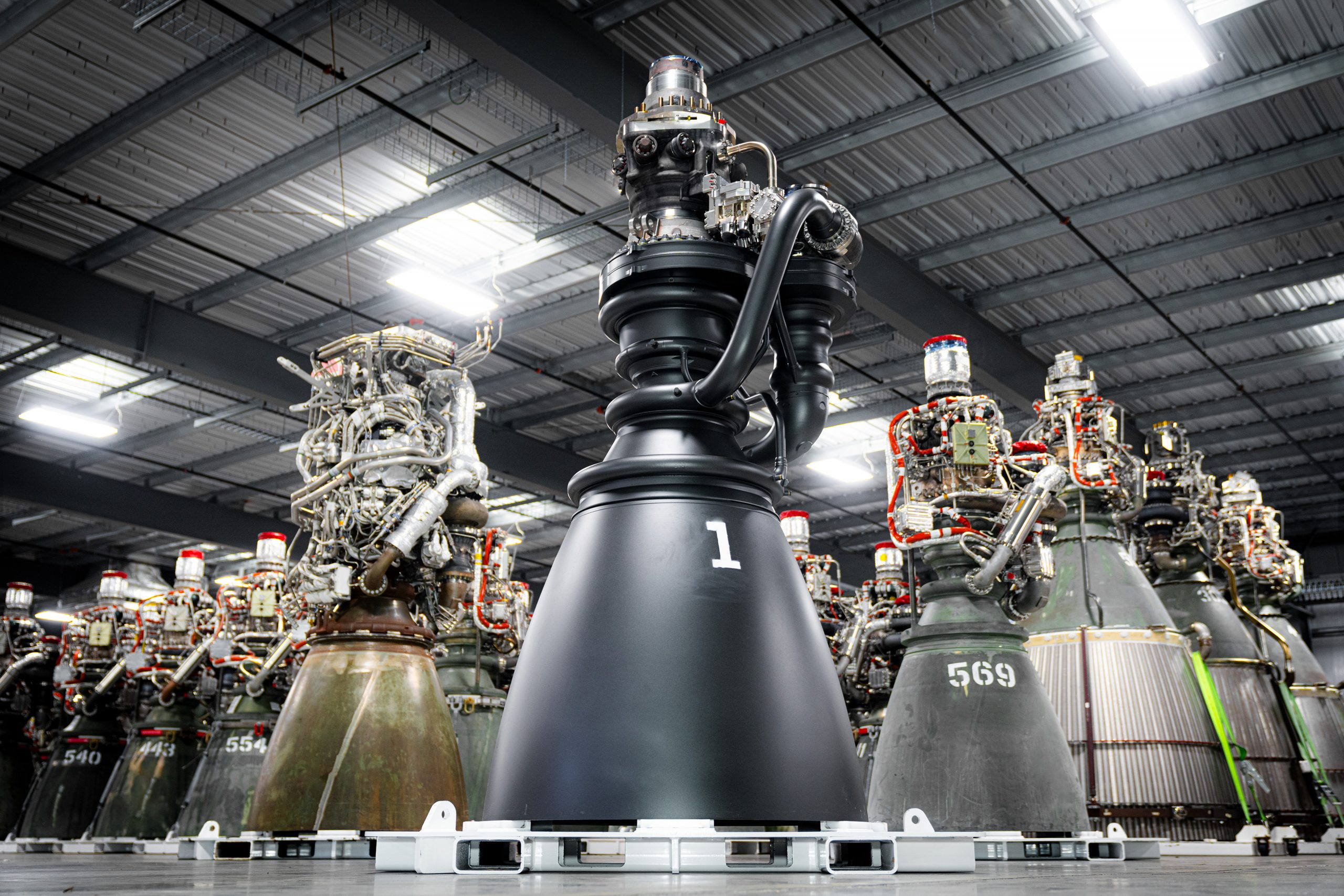
Space Machines Company (SMC), headquartered in Sydney, Australia, has announced the successful completion of its proprietary Scintilla additively manufactured rocket engine. The engine has achieved extended burn durations of 65 seconds with over 1,200 seconds of total testing time and forty restarts to date. The testing represents a critical advancement in the development of the company’s Rapid Response Vehicle – Optimus Viper, designed for rapid orbital manoeuvring and space domain awareness missions.
The Scintilla engine, developed entirely in-house by SMC’s propulsion team, delivers 50 Newtons of thrust while maintaining 92% efficiency. It exceeds the company’s initial 90% efficiency target and clearly has a pathway to near-100% efficiency in future iterations. The metal AM engine reportedly represents a new approach to satellite propulsion, prioritising reliability, scalability, and rapid iteration capabilities.
“We’ve achieved faster progress than even our most optimistic schedules predicted,” stated Rajat Kulshrestha, Co-Founder and CEO of SMC. “The engine has reached steady-state conditions and demonstrated the ability to run for extended periods – a critical requirement for our satellite operations. We can now run this engine for minutes, limited only by total propellant supply from our tanks.”
Unlike traditional satellite manufacturers, who typically outsource propulsion systems, Space Machines Company has invested in complete vertical integration for this mission-critical technology. The decision reflects the central role propulsion plays in the company’s satellite capabilities, with the Optimus Viper platform designed around extensive orbital manoeuvring requirements.
Ian Partis, Vice President, Engineering and Mission Operations at SMC, shared, “Propulsion is absolutely core to what Space Machines needs to do. The better the propulsion system and the more delta-v available, the greater range of orbits we can access and the faster we can get there. This is so fundamental to our mission that the satellite is essentially a propulsion system with a payload on top.”

The completed Scintilla engine progressed through preliminary design, development testing, and critical design review phases. The propulsion system’s design allows for significant performance scaling, with relatively minor modifications allowing thrust to increase from the current 50 Newtons to 100-500 Newtons.
The successful completion of Scintilla demonstrates the effectiveness of SMC’s “build-to-learn, learn-to-build” development philosophy. The team discovered failure modes through rapid iteration, maintained multiple backup systems, and ensured continuous learning capabilities through co-located testing and manufacturing facilities.
“Having everything vertically integrated means we can respond immediately to design changes without external contractor delays,” Kulshrestha added. “When the team identified an issue during testing, they were able to diagnose it within 10 minutes and implement solutions immediately. This kind of responsiveness is impossible when working with external suppliers.”
The in-house propulsion capability positions Space Machines Company uniquely in the global satellite market, where most companies rely on external suppliers for propulsion systems.
With the engine development complete, Space Machines Company is now proceeding to full subsystem integration, incorporating flight-grade valves and propellant management systems. The Scintilla engine will power the company’s Rapid Response Vehicle – Optimus Viper, designed for space domain awareness and rapid orbital manoeuvring missions.
“This achievement demonstrates that small, focused teams can deliver world-class propulsion systems on accelerated timelines,” said Partis. “The propulsion-centric design of our Optimus Viper satellite represents a fundamentally different approach to space missions, where manoeuvrability and rapid response are paramount.”