ORNL develops AM method for PM-HIP canisters
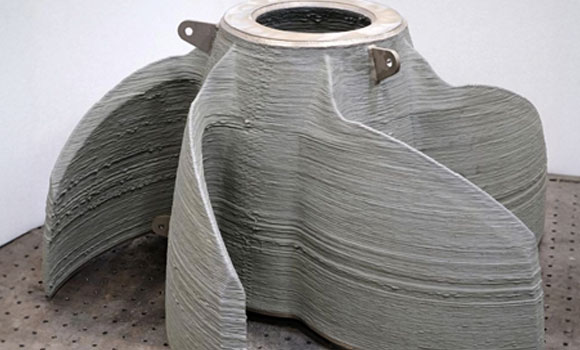
Scientists at the US Department of Energy’s Oak Ridge National Laboratory (ORNL), Tennessee, USA, have developed a method using Additive Manufacturing to produce custom canisters for Powder Metallurgy Hot Isostatic Pressing (PM-HIP). The aim is to streamline production of large-scale metal components for aerospace, energy and medical applications.

PM-HIP consolidates metal powder into fully dense parts under high temperature and pressure within a sealed canister. The process is used to manufacture components such as turbine parts, pressure vessels and other large structural components.

Conventionally, PM-HIP canisters are produced through multiple manufacturing stages, including metal forming, machining and welding. According to ORNL, these steps can introduce defects, increase production costs and limit design flexibility.
The ORNL team instead used Additive Manufacturing to fabricate the canisters, enabling the production of complex geometries tailored to the final component geometry while reducing the number of manufacturing stages required. The approach also enables near-net-shape production, reducing material waste and shortening lead times.
Following manufacture, the canister is filled with metal powder, vacuum sealed and processed by HIP. The elevated temperature and pressure consolidate the powder into a fully dense metal component with minimal internal defects.
“By harnessing the strengths of both Additive Manufacturing and Hot Isostatic Pressing, we are paving the way for greater design freedom and expanded applications in hydropower and next-generation nuclear reactors,” stated Pavan Ajjarapu, researcher at ORNL.
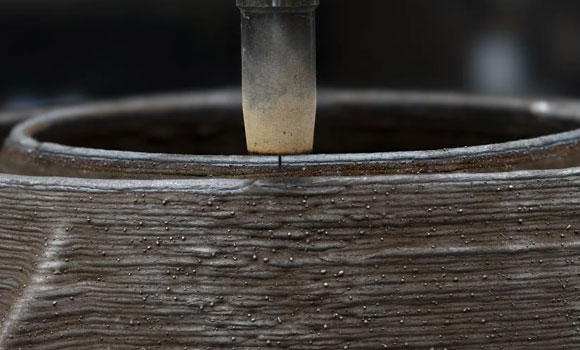
The team reportedly fabricated canisters using a range of Additive Manufacturing technologies, including laser- and wire-based processes, before subjecting the canisters to the standard PM-HIP cycle. The resulting components are intended for use in demanding aerospace and energy applications requiring high strength and reliability under extreme operating conditions.
Researchers also highlighted the potential for PM-HIP to process advanced alloys engineered for enhanced corrosion resistance and high-temperature stability. According to the team, the approach can enable improved control of internal material structures and properties, including radiation resistance for nuclear applications.
“This approach offers an alternative to casting and forging,” added Soumya Nag, ORNL. “It could also help strengthen US manufacturing and national security by easing supply chain shortages.”
The research paper is available here.
ORNL researchers are also developing computational models to predict shrinkage and distortion during PM-HIP processing of large components. It was also posited that an improved understanding of the PM-HIP process could reduce uncertainties in predicting dimensional changes during consolidation. Mechanics-based computational modelling had been used to reduce development costs and lead times by minimising trial-and-error approaches during process development.
The work builds on previous PM-HIP research undertaken at ORNL, including a 2024 project in which researchers reportedly produced a 907.2 kg (2,000 lb) hydropower impeller canister prototype from design to finished part within two days.
Last year, ORNL also hosted a workshop at the Manufacturing Demonstration Facility (MDF), bringing together around 200 stakeholders to discuss challenges and opportunities for PM-HIP production of large-scale metal components.