NASA JPL and Proteus Space achieve successful on-orbit deployment using Additive Manufacturing
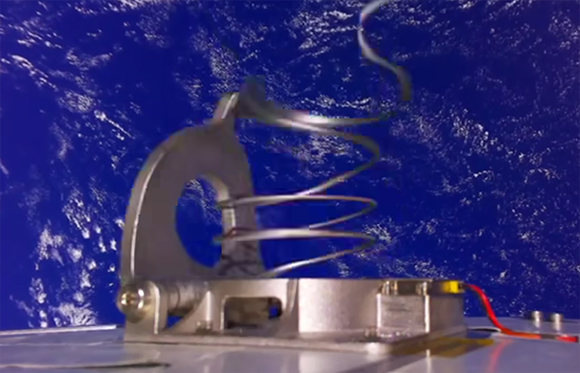
Proteus Space, headquartered in Los Angeles, California, USA, has achieved a successful on-orbit payload deployment in collaboration with NASA’s Jet Propulsion Laboratory (JPL).

The mission utilised the JPL Additive Compliant Canister (JACC), a deployable mechanism based on helical antenna systems, showcasing how Additive Manufacturing can simplify compliant mechanisms and deployable structures.
About the size of a small paperback book when stowed and weighing under 500 g, the jack-in-the-box–style system integrates its lid, canister, hinges, torsion springs, and deployable compression spring into a largely monolithic titanium structure. According to Proteus, this reduces the part count by a factor of three compared with conventional designs.
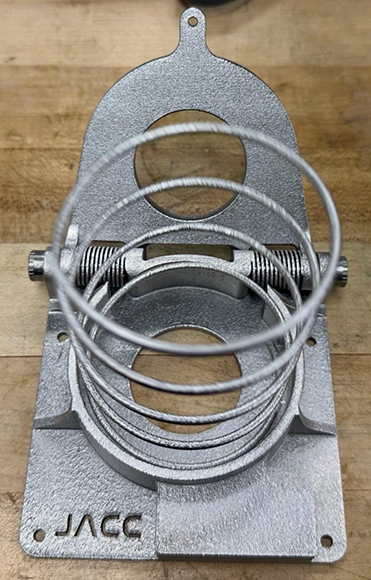
The system features a novel, embedded kinematic hinge architecture and was developed and produced in-house at JPL in less than a year, from napkin sketch to delivery, leveraging the laboratory’s advanced Additive Manufacturing capabilities.
Its successful on-orbit demonstration aboard the Proteus Space M1 ESPA-class satellite underscores the utility of 3D printing for advanced deployable systems on future space missions.

The coiled spring used for on-orbit deployment was additively manufactured from Ti-6Al-4V on an EOS M290 system at JPL. According to Douglas Hofmann, Senior Research Scientist and Principal at JPL, the laboratory has been exploring the novel capabilities of metal Additive Manufacturing to embed springs, flexures, and mechanisms directly into structural hardware for applications such as deployment, flexible thermal management, pointing, and manipulation or grasping. The collaboration with Proteus Space enabled rapid flight infusion of the additively manufactured spring.