Marotta installs PBF-LB AM water valve aboard US Navy ship
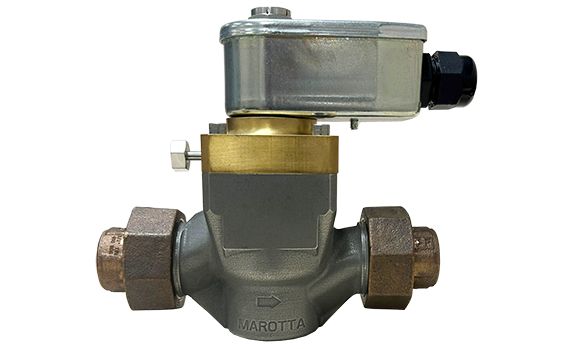
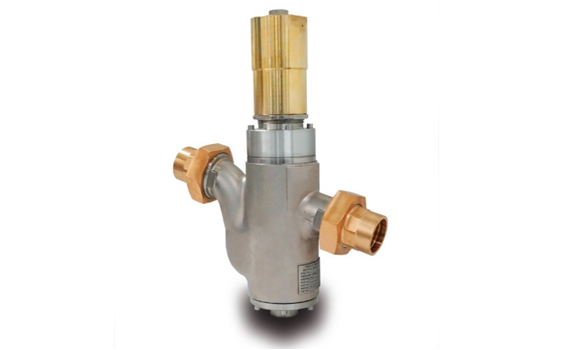
Aerospace and defence supplier Marotta Controls, Montville, New Jersey, USA, has successfully installed an additively manufactured chilled water valve (Model MV286A) aboard a US Navy ship.
The component was installed in April 2025 as part of a Navy-sponsored initiative to integrate Additive Manufacturing technology into fleet operations. The effort was funded by the Maritime Sustainment Technology and Innovation Consortium (MSTIC), a US Navy OTA programme focused on the strategic introduction of advanced manufacturing solutions to the fleet.

“We remain committed to partnering with the Navy on advanced manufacturing techniques that push the technical envelope of performance, driving innovation without sacrificing quality and reliability,” said Bryan Begane, VP – Naval Systems, Marotta Controls. “This is one of the exciting steps Marotta has taken in our product roadmap that combines new elements and capabilities with our longstanding heritage in naval systems.”
The initiative began as a targeted response to longstanding supply chain challenges. Marotta selected the MV286A valve body as a candidate for redesign due to its historically long procurement time – twenty-nine weeks for a traditional sand-cast brass body – and significant quality control issues related to porosity and part rejection rates.
Marotta’s engineering team redesigned the brass valve body with a requalified version produced via Laser Beam Powder Bed Fusion (PBF-LB) using Inconel 625, a corrosion-resistant nickel superalloy. Marotta reported a 70% reduction in lead time to produce a high-performance component which met rigorous Navy requirements (e.g. high-impact shock per MIL-S-901E and vibration per MIL-STD-167-1).
NAVSEA approved the qualification reports, allowing shipboard integration. Three valves were installed as part of the MSTIC effort, offering both operational value and a validation point for broader AM adoption within naval systems.
“Producing a low-risk, high-volume component with AM allowed us to deliver quickly, meet stringent naval requirements, and position ourselves to support future readiness needs,” added Begane. “We’re proud to be supporting the Navy’s investment in advanced manufacturing.”
The company has stated that this successful installation underscores its role in strengthening defence supply chains through precision engineering and smart manufacturing. As Additive Manufacturing matures, Marotta plans to expand AM integration across a wider portfolio of components supporting air, land, sea, and space domains.