Lockheed Martin highlights Divergent AM drone collaboration
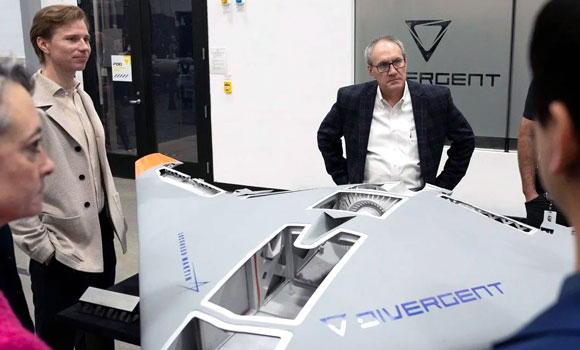
Lockheed Martin, headquartered in Bethesda, Maryland, USA, has highlighted its investment and collaboration with Divergent Technologies, based in Torrance, California, USA, as an example of how it is working with emerging technology companies to accelerate speed, scale and mission impact.

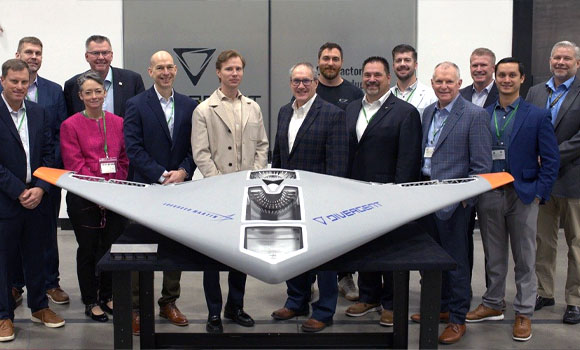
In 2024, Lockheed Martin invested $25 million in Divergent, supporting efforts to explore applications across multiple mission areas, including advanced munitions and a vehicle concept developed with Lockheed Martin Skunk Works called the Replicator.
Strengthening the defence industrial base, and increasing the speed at which it can deliver, has become a central focus across government and industry. According to Lockheed Martin, the collaboration reflects this priority: accelerating how quickly advanced capabilities can move from design to production.
By pairing aeronautical expertise with Divergent Technologies’ Divergent Adaptive Production System (DAPS), the team demonstrated the potential of a digital design-to-production model. By using digital engineering and Additive Manufacturing to rapidly iterate designs and produce hardware prototypes, the team took a 2.75 m wingspan Unmanned Aircraft System, or drone, from concept to first article in less than one year.
Divergent’s Additive Manufacturing model also introduces the potential for more flexible production by reducing reliance on traditional supply chains and enabling faster response to changing operational needs. Across Lockheed Martin, teams are assessing where these approaches could have the greatest impact, from munitions components to aerospace and rotorcraft applications.

Lockheed Martin’s approach goes beyond exploring new technology. It focuses on helping promising solutions transition to production at scale. The company stated that while efforts like Replicator-related concepts remain in early stages, they are helping inform how future systems could be developed and scaled to meet evolving mission demands.