Kruch outlines Additive Manufacturing process for rail clamps
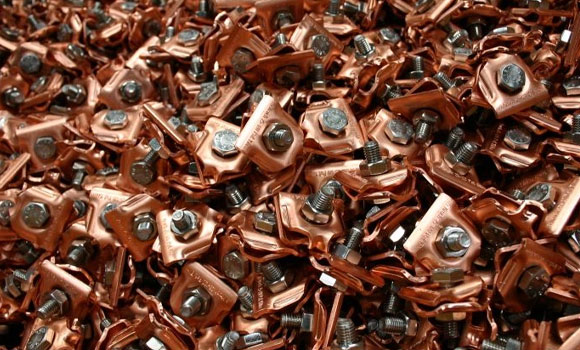
Kruch Railway Innovations GmbH, Vienna, Austria, has shared details of its component development workflow in a series of LinkedIn posts, outlining how the company uses Additive Manufacturing to develop and prototype copper catenary clamps for railway infrastructure.

Catenary clamps are fasteners used to secure conductors or catenary wires, the tensioned support ropes suspended between two anchor points. Kruch produces clamps with and without thimble connections, crossing clamps and twin messenger wire clamps.
In its posts, the company described a basic four-stage process covering idea generation and requirements definition, standards-based digital development, prototyping, and final testing and validation.
According to Kruch, each project begins by identifying the specific operational problem a clamp is intended to solve. This is followed by the creation of a structured list of requirements, which the company states forms the basis for all subsequent development and testing activities.
In the second stage, Kruch incorporates relevant ISO and EN standards into the development process while using 3D design and simulation tools to refine the clamp geometry. The company added that selected customers and end users are involved during this phase to help optimise the final design.
The company then moves to prototyping using Additive Manufacturing technologies. Initial prototypes are produced through polymer-based Additive Manufacturing processes to assess the component’s form and handling characteristics before further refinements are made. A final prototype is then manufactured as a metal AM component prior to testing and validation for series production.
Kruch states that the final stages of development focus on validating the prototypes and preparing the components for production deployment in railway catenary systems.
Founded in 2007, Kruch Railway Innovations develops overhead line components and railway infrastructure systems for the international rail sector.