Kinectrics and Burloak address obsolescence with nuclear-grade AM parts
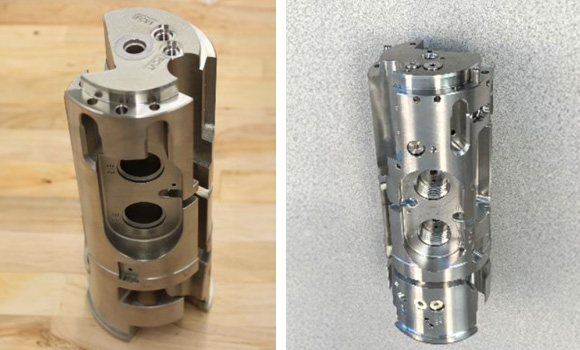
Canadian companies Kinectrics, a division of BWX Technologies Inc, based in Toronto, and Burloak Technologies, a division of Samuel, Son & Co, headquartered in Oakville, have demonstrated the successful application of metal Additive Manufacturing for nuclear energy applications. The partners have produced and fully tested nuclear-grade components intended to address obsolescence in operational fleets, as well as supporting emerging reactor technologies.
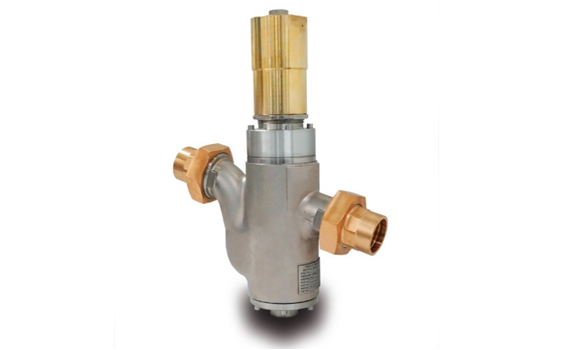
Building on a partnership started in 2021, this latest collaboration involved the Additive Manufacturing of a hydraulic manifold – a complex, pressure-retaining component made from high-grade steel that was originally produced through conventional means. To shift from a traditional manufacturing process, the part was designed and manufactured to meet the stringent mechanical and safety requirements of nuclear service environments.
The hydraulic manifold was produced at Burloak’s AS9100 and ISO 9001-certified facility using 17-4 PH stainless steel on an EOS M290 Laser Beam Powder Bed Fusion (PBF-LB) Additive Manufacturing machine. The part includes internal passageways optimised for flow performance, benefiting from the geometric freedom that AM provides. Post-processing steps that were performed using Burloak’s in-house capabilities included NADCAP-accredited heat treatment, five-axis CNC machining, ISO 17025-accredited lab testing, and advanced metrology.
Further collaboration
While the initial focus of this AM project is on addressing high-obsolescence risk components in Canada’s CANDU fleet and other ageing nuclear reactors, both companies report seeing a clear role for AM in the development of Small Modular Reactors (SMRs) and advanced reactor designs. Additive Manufacturing’s ability to reduce part count, optimise fluid dynamics, and enable rapid prototyping aligns with the performance, cost, and scalability goals of next-generation nuclear technologies.
“This programme demonstrates that AM parts can be qualified for nuclear use when the process is controlled and validated to nuclear-grade standards,” stated David Marttila, Senior Director, Nuclear Equipment Solutions, Kinectrics. “We’ve applied the same rigour we bring to traditionally manufactured components, ensuring that safety, performance, and traceability remain uncompromised.”
Jason Ball, VP/GM, Burloak Technologies, added, “Additive Manufacturing enables on-demand production of replacement parts that are otherwise impossible to source. We’re not only solving for obsolescence — we’re working with Kinectrics to help develop the framework for using the Additive Manufacturing process in the Canadian nuclear industry, while creating new engineering options that meet and often exceed the performance of legacy manufacturing processes.”