Frenzy engine passes altitude tests as Beehive targets 2026 flight
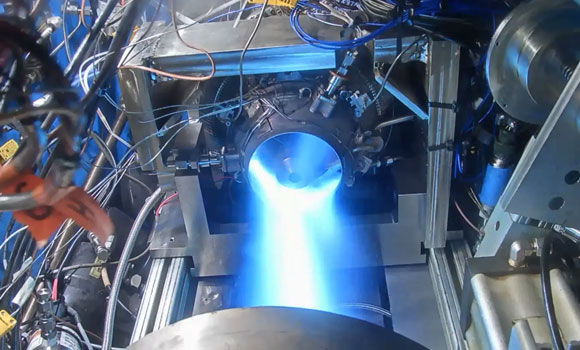
Beehive Industries, based in Englewood, Colorado, USA, has announced the successful completion of high-altitude testing for its 200 lbf Frenzy engine, marking another major milestone in the company’s rapid development programme and confirming readiness for flight testing in the first quarter of 2026.

The high-altitude test campaign, conducted at a government test facility in Ohio, validates Frenzy’s performance and capability across the full flight envelope. With this success, Beehive has completed altitude testing on schedule and is preparing to scale production to meet surging customer demand.
“The milestone confirms Frenzy’s readiness for flight integration,” said David Kimball, Chief Technology Officer at Beehive Industries. “In less than a year, we’ve gone from concept to proven high-altitude performance — and we’re doing it ahead of schedule because of the talented and determined team at Beehive. Frenzy is now flight-ready, and our production system is ready to scale alongside it.”
The altitude campaign follows the company’s announcement in September of successful ground testing on six engines in just four months. Beehive shipped two prototype engines to a government testing facility in Ohio on schedule in October for a series of high-altitude tests. The results, spanning performance, ignition at altitude, operability, and durability, all met or exceeded challenging Air Force requirements, validating the disruptive capability of the Frenzy engine.
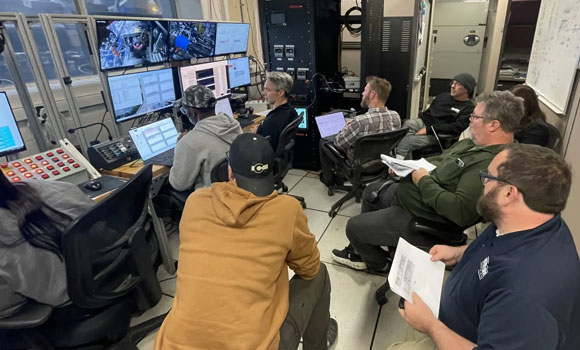
The Frenzy engines were said to demonstrate successful ignition and operation across the flight envelope; rapid acceleration from light-off to 100% engine speed; turbine temperatures and thrust-specific fuel consumption better than predicted; and “like new” hardware condition after mission-life equivalent runtime.
These results validate Beehive’s Additive Manufacturing-first approach, which allows the company to compress traditional aerospace development cycles from years to months while delivering disruptive cost and performance at unmatched scale.
“This test campaign not only demonstrates the full potential of our engine, but also how we move with speed through a highly iterative, cross-functional development programme,” Kimball added. “Each milestone strengthens our confidence in the architecture, our ability to deliver on our commitments, and the disruptive path we’re charting for next-generation propulsion. We’re not just accelerating development timelines — we’re ensuring America’s warfighters have the technology they need, when they need it most.”
With flight testing set for early 2026, Beehive is preparing to integrate the Frenzy engine with its first flight vehicle, the final step before entering low-rate initial production. The company’s facilities in Denver, Cincinnati, and Knoxville are already ramping capacity to meet anticipated production demand.
Beehive has achieved extraordinary milestones with its Frenzy engine, building on a $12.46 million contract from the US Air Force Rapid Sustainment Office (RSO)/University of Dayton Research Institute (UDRI), awarded in October 2024, and the engine’s formal introduction in December 2024. The Frenzy engine family spans 100 to 300 lbf, designed to power next-generation uncrewed aerial systems (UAS) with unmatched efficiency, reliability, and affordability.