ESA, Airbus and DLR to additively manufacture functional 1 N thruster on Space Station
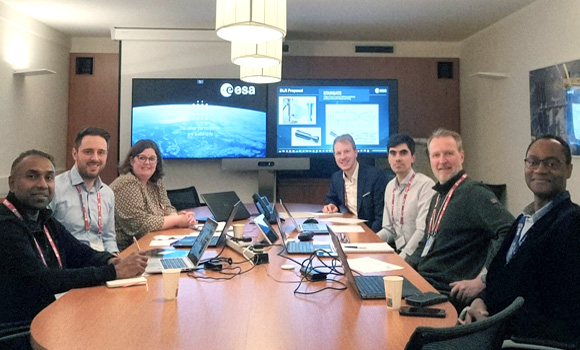
The European Space Agency (ESA), Airbus Defence and Space, and the German Aerospace Center (DLR) are set to additively manufacture a one-Newton thruster aboard the International Space Station (ISS). If successful, it will mark the first fully functional propulsion system produced in space that could then be used directly in orbit.

Once additively manufactured, the thruster developed by DLR will be returned to Earth for hot-fire testing under real-world conditions.
The project relies on ESA’s Metal 3D Printer initiative, with the thruster representing the fifth build job for the onboard wire-based Directed Energy Deposition (DED) AM machine. Known as the Stargate Project, this technology demonstration could open new frontiers for space exploration. By examining microgravity’s influence on the AM process and material properties, the project advances metal AM technology both in space and on Earth.
“We will be the first to attempt 3D printing metallic space propulsion components directly on the ISS in space! After printing, we will test the thruster’s functionality in a hot gas test, leaving one thruster completely as built without any post-processing,” stated Dr.-Ing. Juri Munk, a Postdoctoral Researcher at DLR, via LinkedIn. “If successful, we will be the first to manufacture a fully functional spacecraft component in space that can be used directly in orbit. I am excited to see if we can make this breakthrough for space exploration happen!”