DEEP consortium explores Additive Manufacturing of smart propeller
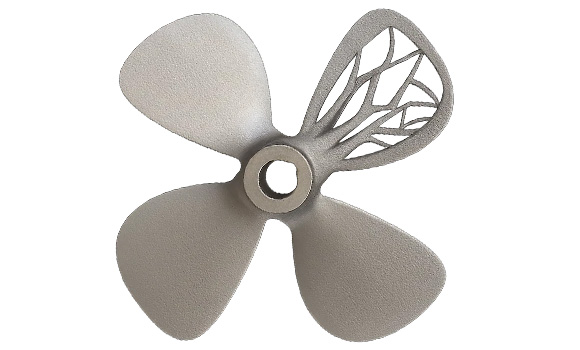
The Digitally Enabled Efficient Propeller (DEEP) project, with participants from both industry and research, has launched to develop a marine propeller that combines Additive Manufacturing with digital twin technology. If successful, this integration could transform propellers from passive hardware into smart, cyber-physical systems capable of monitoring their performance throughout their operational life.

Backed by Innovate UK, the project will test multiple AM processes against traditional casting and establish a pathway to classification approval and industrial adoption in the maritime sector.
The initiative is led by Enki Marine Ltd with partners including Stone Marine Propulsion, TWI, DEEP Manufacturing, Authentise, ASTM International and Newcastle University.
The project will investigate the technology readiness level (TRL) of multiple Additive Manufacturing processes for the highly regulated and complex maritime sector, benchmark their performance against conventional casting methods, and establish a clear pathway towards classification approval and type certification. Using this approach, as well as working to deliver any technology advancements, the project is expected to create a credible framework for industrial adoption and regulatory compliance.
“ENKI’s core mission is to ensure that emerging technologies are not only cutting edge, but also safe, purpose-driven, and seamlessly integrated into the maritime sector,“ stated Dr Milad Armin, Executive Director at ENKI. “We are proud to collaborate with a world-leading consortium on the DEEP programme, which supports our mission and will pioneer a new generation of marine propellers manufactured through advanced Additive Manufacturing processes and enhanced with digital twin technology.”
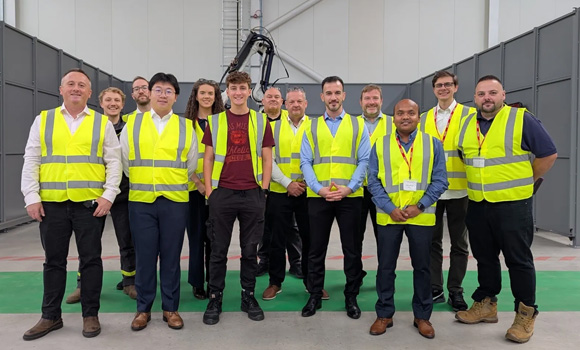
“DEEP Manufacturing is delighted to collaborate with world-leading organisations in the maritime, technology, and standards sectors to further the development and deployment of advanced applications in Additive Manufacturing,” stated Peter Richards, CEO of DEEP Manufacturing. “As a pioneer in the field of Wire Arc Additive Manufacturing (WAAM), we have consistently demonstrated leadership in translating emerging technologies into practical, real-world solutions.”
“Through the DEEP project, we look forward to applying our proven expertise and technical knowledge to support the advancement of innovative manufacturing practices that further helps to drive transformation within the industry,” he concluded.
The DEEP concept has secured funding from Innovate UK, part of UK Research and Innovation (UKRI), through the Clean Maritime Demonstration Competition (CMDC6) to launch the Techno-Economic Feasibility Study of Manufacturing Digitally Enabled Efficient Propellers.
The project will run from September 2025, with the first phase focusing on evaluating Additive Manufacturing processes. Subsequent stages will validate the demonstrator on Newcastle University’s research vessel, with the long-term aim of enabling type approval and scaling production for commercial adoption by the global fleet.