BLT supports validation of high-strength aluminium AM alloys
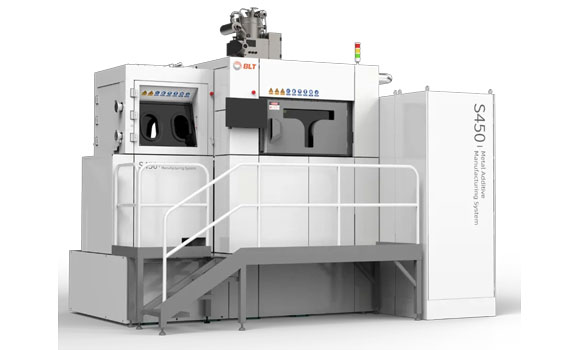
Xi’an Bright Laser Technologies (BLT), based in Xi’an, China, has reported that its Laser Beam Powder Bed Fusion (PBF-LB) Additive Manufacturing has supported the development and validation of a new family of high-strength aluminium alloys developed by Chinese materials company AccMaterial and researchers at Shanghai Jiao Tong University.
The research, published in Nature Communications, is said to address a longstanding challenge in the development of aluminium alloys for Additive Manufacturing: achieving high processability, strength and ductility simultaneously. Using a design strategy based on a Ductile-Transformable Eutectic Nano-Skeleton (DT-ENS) formed through non-equilibrium solidification, the team developed the RAE600 and RAE700 alloy grades.
BLT’s BLT-S210 and BLT-S450 PBF-LB Additive Manufacturing machines were used throughout the engineering validation phase of the project, supporting process development, microstructural optimisation and component-scale verification of the company’s RAE-series Al-Er-based alloys.
AccMaterial reported that the alloys achieved porosity levels below 0.05% under PBF-LB processing conditions while delivering yield strengths of 648–707 MPa, ultimate tensile strengths of 656–714 MPa and elongation values of 7.0–10.3%.
The researchers attribute this combination of strength and ductility to the formation of an Al₃(Er,Mg) eutectic nano-skeleton. During deformation, the structure reportedly accommodates plastic deformation through nanotwinning and the formation of 9R-type long-period stacking structures, contributing to improved mechanical performance.
During engineering verification, the BLT-S210 was used for process development and parameter optimisation owing to its process repeatability and parameter control capabilities. According to the team, this enabled rapid identification of suitable alloy compositions and processing parameters for microstructural studies.
The larger-format BLT-S450 was used to assess the manufacturability of larger components. Its multi-laser architecture was used to evaluate density and property consistency in larger parts, supporting the transition of the material towards engineering applications.
The RAE materials have reportedly been validated in a range of demonstration components, including robotic leg structures, satellite brackets and lightweight topology-optimised components.
AccMaterial states that it has established an engineering materials ecosystem around the RAE alloy family, covering powder production, process development, heat treatment and component validation. The company also reported that intellectual property relating to the technology has been filed in Europe, the USA, Japan, Russia and other regions.
BLT stated that it will continue developing Additive Manufacturing equipment technologies and collaborating with research organisations and industrial users to support the transfer of new materials from laboratory research to industrial-scale production.
‘Strong 3D-printed aluminium reinforced with ductile-transformable eutectic nano-skeleton’ is available here.