AMEXCI additively manufactures first Swedish-produced SIG Sauer suppressor
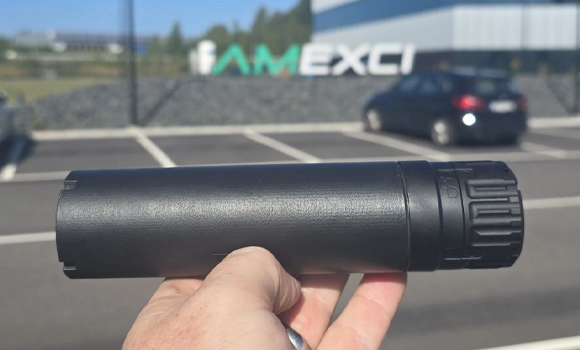
SIG Sauer Inc, headquartered in Newington, New Hampshire, USA, and Swedish companies AMEXCI, based in Örebro, and MP-SEC International AB, located in Mölnlycke, have collaborated to produce the first SIG Sauer suppressor manufactured and assembled in Sweden.
Joshua Shoemaker, Defence Product Manager at SIG Sauer Inc, stated in a LinkedIn post, “Sweden has an increasingly important role to play in European and NATO defence, and this partnership demonstrates the strength of Swedish engineering and manufacturing when combined with SIG Sauer’s global defence expertise.”
Shoemaker added that the project demonstrates what is possible when global defence manufacturers and European industry work together to develop local manufacturing capability, technical expertise, and resilient defence supply chains.
The suppressor was additively manufactured by AMEXCI, a certified producer of Powder Bed Fusion (PBF-LB) components in aluminium, titanium, stainless steel and nickel-based superalloys.
Edvin Resebo, CEO and co-founder of AMEXCI, stated, “For us, this milestone is proof of a principle we have built AMEXCI around: advanced defence components can and should be produced close to where they are needed. Qualified, certified, and serially manufactured on European soil.”
MP-SEC International is a supplier of equipment to police, defence, and security organisations in the Nordics. Since its inception in 1994, the company has built a network of over 100 international manufacturers and acquired extensive knowledge of the requirements set by Nordic authorities.
Pär Biörsson, CEO of MP-SEC, described the Swedish production as a first step. “Our ambition is to keep building production capability in both Sweden and Finland, so that Nordic defence forces are supplied from a Nordic industrial base with the resilience that comes with it.”
“Thank you to SIG SAUER for the trust and for backing real industrial capability in the Nordics, and to AMEXCI for the manufacturing expertise that made it happen. Projects like this only work when partners share the same standard of quality and the same willingness to solve problems together,” concluded Biörsson.