Agnikul claims world’s largest single-piece AM Inconel rocket engine
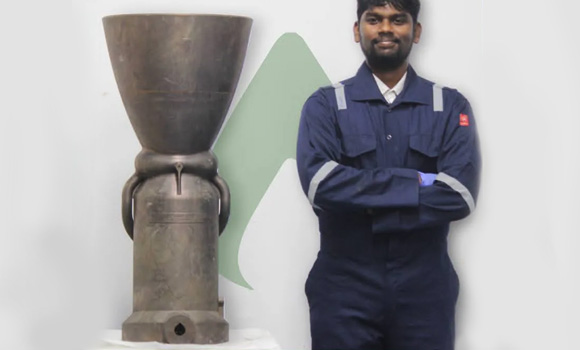
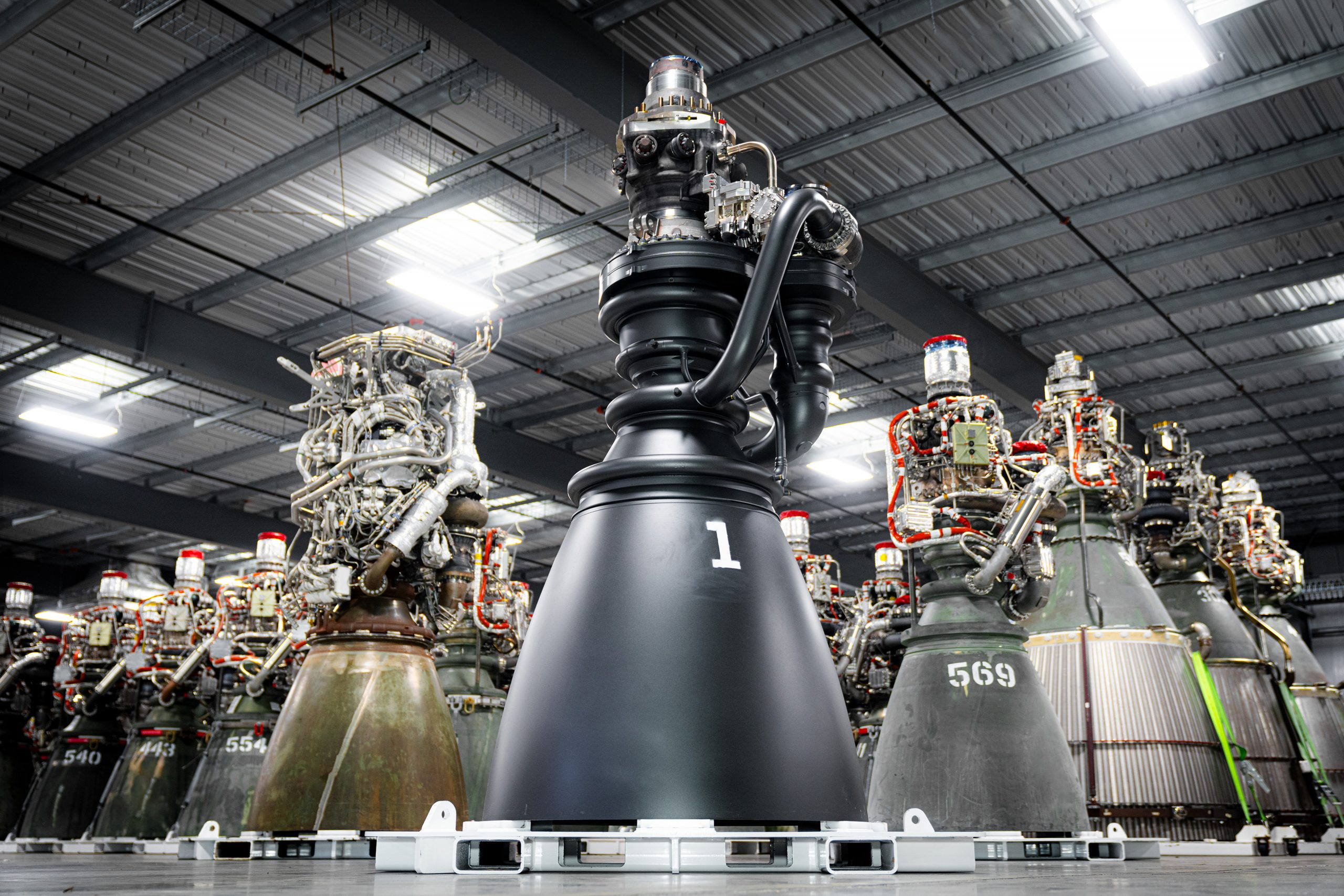
Indian space startup Agnikul Cosmos, a spin-off from Indian Institute of Technology – Madras, has announced that it has introduced what it is claiming to be the world’s biggest single-piece additively manufactured Inconel engine. The engine, which is about a metre long, is manufactured as a single integrated component, eliminating the need for welds, joints or fasteners from fuel entry to plume exit.

This significantly reduces manufacturing complexity, production time, and potential failure points, positioning Agnikul at the forefront of Additive Manufacturing in rocketry.
The method behind Agnikul Cosmos’ engine eliminates the need for traditional assembly processes, which often involve the complex welding and joining of multiple parts. Inconel, a nickel-chromium-based superalloy, is used to ensure that the engine can withstand the extreme temperatures and pressures encountered during rocket launches.
The scale and complexity of the new engine surpass earlier models, allowing for more efficient fluid flow and improved durability. This fully integrated manufacturing approach reportedly reduces production time by over 60% and reduces weight, enhancing the overall performance and cost-effectiveness of the rocket.
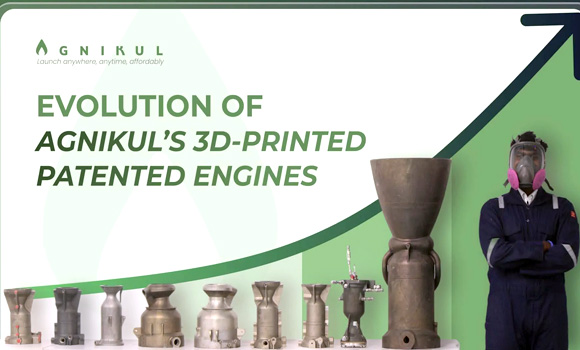
Additionally, Agnikul has been granted a US patent for the design and manufacturing process of this single-piece rocket engine. The US patent granted provides legal protection in a highly competitive global market historically dominated by established aerospace giants, further strengthening India’s position in space technology. This patent marks a notable achievement for an Indian-origin design, reflecting the startup’s growing influence in global space technology and reinforcing India’s position in the next-generation rocket manufacturing landscape.
By securing IP rights in the US, Agnikul not only protects its invention but also enhances its appeal to international investors and partners. The company’s progress is supported by collaborations with key Indian space institutions, including ISRO and INSPACe, as well as partnerships with companies such as Wipro 3D. Government backing through agencies like the Department of Science and Technology (DST) and the Technology Development Board (TDB) has been instrumental in fostering innovation.