WAAM3D introduces dual-wire capability as standard on MiniWAAM metal AM machine
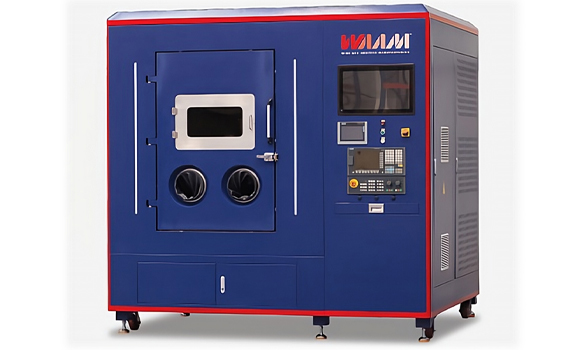
WAAM3D, Milton Keynes, UK, has upgraded its MiniWAAM metal Additive Manufacturing machine, making dual-wire capability a standard feature. The updated MiniWAAM/DW offers high deposition rates, multi-material processing and in-process alloying.
“We’re proud to bring dual-wire capability to the Additive Manufacturing industry,” stated Ilhan Yigit Basar, Marketing Manager at WAAM3D. “The MiniWAAM/DW demonstrates WAAM3D’s expertise in the production of 3D-printed metal components. With the MiniWAAM/DW, it can be just a matter of hours from completing the CAD design to producing the first part.”

The MiniWAAM/DW incorporates capabilities previously available on WAAM3D’s larger machines in a machine designed for smaller components. It offers a build volume of 0.6 × 0.6 × 0.5 m, while the larger RoboWAAM Plus can manufacture parts weighing up to 3 tonnes within a build area of 2 × 2 × 2 m.
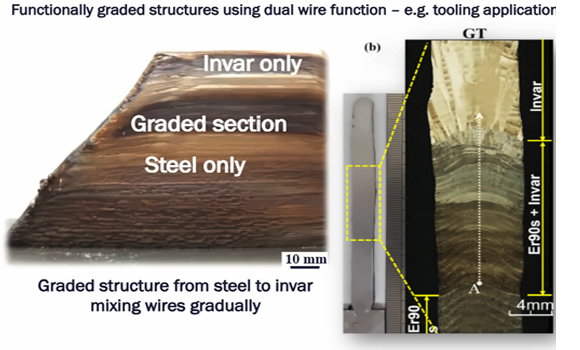
Dual-wire capability allows two wires of the same alloy to be fed simultaneously to increase deposition rates, or wires of different compositions to be used for multi-material processing and in-process alloying. For example, combining steel with nickel-aluminium bronze can provide high strength and resistance to cavitation damage in marine applications. Alternatively, low-carbon steel structures can be clad with Invar to improve dimensional stability in applications involving significant temperature fluctuations, including those in the aerospace, energy and nuclear sectors.
The WAAMPlanner and WAAMCtrl software supplied with the machines account for multiple factors, including multi-material processing requirements, to predict build rates for individual parts. WAAM3D also offers an evaluation service through which prospective users can submit a CAD file to receive an estimated production time per part.
WAAM3D is currently exhibiting at Formnext in Hall 11, Stand B11.