Eplus3D supports nickel-copper alloy PBF-LB validation
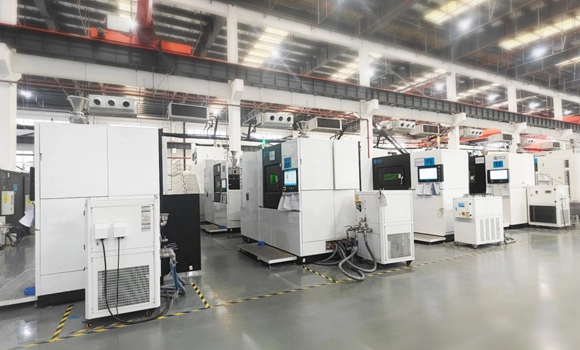
Eplus3D, headquartered in Hangzhou, China, reports it has supported Jiangsu Young-Will Aerospace Equipment Technology Co., Ltd in completing Laser Beam Powder Bed Fusion (PBF-LB) process validation for a nickel-copper alloy using the EP-M400 metal PBF machine. Through process parameter development and scanning strategy optimisation, the project achieved crack-free production of nickel-copper alloy components. Eplus3D reports that the additively manufactured parts reached a tensile strength of 570 MPa, representing an 18% improvement compared with conventionally forged parts.
According to Eplus3D, the result demonstrates the formability potential of nickel-copper alloys in metal Additive Manufacturing and the potential of the EP-M400 for special alloy process development.
From printability to process validation
Nickel-copper alloys are known for corrosion resistance, stable medium-temperature strength and good processability, making them suitable for demanding aerospace-related applications such as fuel pipelines, hydraulic components, landing gear parts, aircraft engine combustion chambers, fasteners, rocket engine pipe joints and sealing parts, Eplus3D stated.
For metal AM, however, material potential is only the starting point. Nickel-copper alloys require careful control of crack formation, elemental segregation, part density and mechanical performance during the PBF-LB process. Eplus3D stated that although copper segregation at grain boundaries is difficult to avoid completely, its impact can be reduced through precise process control.
EP-M400 supports nickel-copper alloy process development
For the Young-Will Aerospace project, Eplus3D used the EP-M400 as the process development and part manufacturing platform. The team optimised process parameters and scanning strategies around the forming characteristics of the nickel-copper alloy, establishing a stable processing route for the material.
The project successfully produced crack-free nickel-copper alloy components and achieved a tensile strength of 570 MPa, 18% higher than that of conventionally forged parts.
Developed by Eplus3D for medium-to-large metal part production, the EP-M400 has a build chamber of 400 × 400 × 450 mm, can be equipped with up to six lasers and offers a stated maximum build rate of 210 cm³/h. The machine can be used for complex structural parts and batch production, as well as special alloy process development.
From process validation to complex structural applications
For aerospace fluid, sealing and low-temperature-related components, conventional manufacturing can involve multiple machining, welding and assembly steps, increasing the need to manage structural complexity, joint reliability and potential leakage risks.
PBF-LB offers an alternative manufacturing route for these applications. Eplus3D stated that the process could enable nickel-copper alloys to be manufactured as integrated complex structures for applications including fuel pipe joints, valve components, sealing structures and low-temperature storage and transfer components.
The EP-M400-based validation was more than a single material printing trial. It established a process foundation by matching powder behaviour, equipment capability, process window, scanning strategy, and final part performance.
Eplus3D sees further potential for nickel-copper alloys in applications including liquid hydrogen storage and transfer systems, rocket engine fuel pipe joints and valve sealing components, where metal AM could support the production of complex integrated structures.