Avimetal wins two awards for nickel superalloy and titanium Additive Manufacturing developments
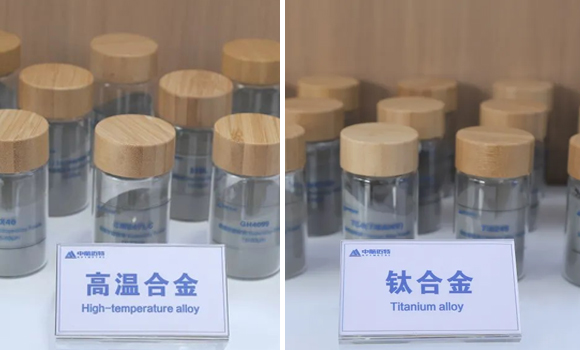
Avimetal, a provider of metal Additive Manufacturing solutions headquartered in Beijing, China, has received two Technical Invention Awards at the 2026 China Machinery Industry Science and Technology Awards. The company gained a second- and third-place prize recognising breakthroughs in crack-free nickel superalloys and high-performance titanium/magnesium alloys.
The awards are jointly administered by the China Machinery Industry Federation and the Chinese Mechanical Engineering Society, and recognise achievements in technological invention and innovation within China’s machinery sector. Of the 536 projects recognised in 2026, only forty-five received Technical Invention Awards.
The materials were reported to have been developed in collaboration with Shandong University and Hebei University of Science and Technology, along with a number of other research partners.
Nickel-based superalloys for laser Additive Manufacturing
The Second Prize was awarded for the project ‘Key Technologies and Applications of Cross-Scale Microstructure and Property Control in Laser Additive Manufacturing of Nickel-Based Superalloys.’ The research addressed challenges associated with microcracking and inconsistent material properties in the Additive Manufacturing of nickel-based superalloys, which are used in aerospace engines and power-generation equipment operating under extreme conditions.
The project team developed an integrated approach combining active crack control, alloy composition–process–property design and gas atomisation for powder production.
The reported developments include GH3230-G, a nickel-based alloy designed for crack-free Additive Manufacturing that is now in volume production. Avimetal states that the alloy’s high-temperature strength and elongation at 900 °C are at an “internationally leading level.”
The team also developed precipitation-strengthened superalloy powders, including IN738 and CM247LC. Following optimised heat treatment, components produced using these materials are reported to exhibit no macrocracking or deformation, while maintaining performance at 1,100 °C.
Another development is a range of VIGA atomisation equipment designed to produce nickel-based superalloy powders with high sphericity. According to Avimetal, the equipment is supported by the industry’s first production line for high-quality nickel-based superalloy powder with an annual capacity of 500 tonnes.
According to Avimetal, the resulting materials, equipment and components are already in widespread use in aerospace and other sectors.
Titanium and magnesium alloy Additive Manufacturing
The Third Prize was awarded to the project ‘Key Technologies and Equipment for Laser Additive Manufacturing of High-Performance Titanium/Magnesium Alloys,’ which focused on lightweight alloy components for aerospace, automotive, medical and intelligent equipment applications.
The project addressed technical challenges associated with electrode induction melting gas atomisation (EIGA), powder sieving, multi-channel dust suppression and control of additively manufactured component properties. The team has developed an integrated system covering materials, processes and equipment for laser powder bed fusion of lightweight alloys.
Developments include titanium alloy powders such as Ti6Al4V, TA15 and TA31, with reported improvements in mechanical properties. Additively manufactured porous Ti6Al4V specimens demonstrated a 42.49% increase in compressive strength, while structural components achieved weight reductions of more than 50%.
The project also involved the development of high-capacity EIGA and new-generation plasma atomisation (PA) powder production equipment, designed to increase fine-powder yields and enable cost-effective, large-scale domestic production of titanium powders. The reported yield of powder in the 15–53 µm particle size range exceeds 85%.
Avimetal states that the project has established a complete production chain for lightweight alloy Additive Manufacturing, supporting the development of strategic emerging industries.