RWTH Aachen to demonstrate AI-optimised DED tool repairs at Formnext 2026
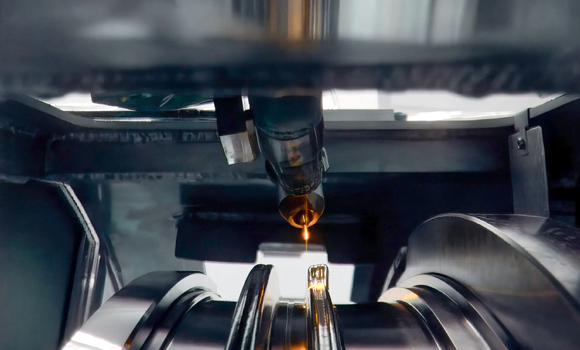
Researchers at the Chair of Digital Additive Production (DAP) at RWTH Aachen University are developing an artificial intelligence (AI) approach to improve forming tool repairs carried out using powder-fed, laser-based Directed Energy Deposition (DED-LB).
DED-LB enables worn edges and surfaces to be rebuilt close to their final contours, making it particularly suitable for the repair of larger components. However, variations in the required track width along a toolpath can present challenges. When process parameters remain constant, changes in track width can also affect track height, potentially resulting in uneven repairs. Identifying suitable parameters for different track geometries can also be time-consuming.

To address this, the DAP researchers have developed an artificial neural network that predicts the local adjustments to laser power and scanning speed required to achieve a predefined track geometry. The network was trained using metallographic cross-sections and finite element (FE) simulations.
The approach is intended to produce more uniform repairs despite variations in track width, reduce post-processing requirements and minimise the need for trial-and-error parameter selection. Thermal simulations are also used to visualise heat accumulation layer by layer.
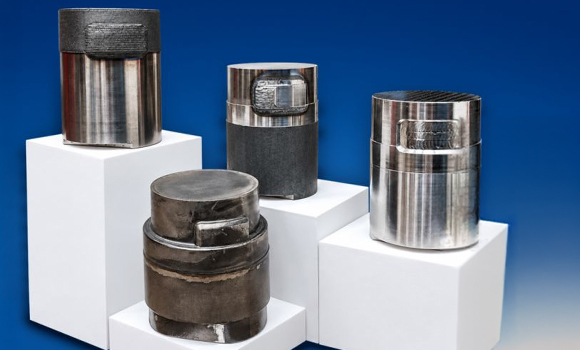
The researchers have already implemented the approach on a forming tool insert as part of the research project. At Formnext 2026, DAP plans to demonstrate the results through a direct comparison of individual tracks deposited using standard process parameters and those produced using AI-optimised parameters.
The research will be presented alongside other projects in collaboration with ACAM Aachen Center for Additive Manufacturing GmbH and research partners at Formnext 2026, Hall 11, Booth D32.