Blue Origin uses Additive Manufacturing for over 65% of new Northstar rocket engine
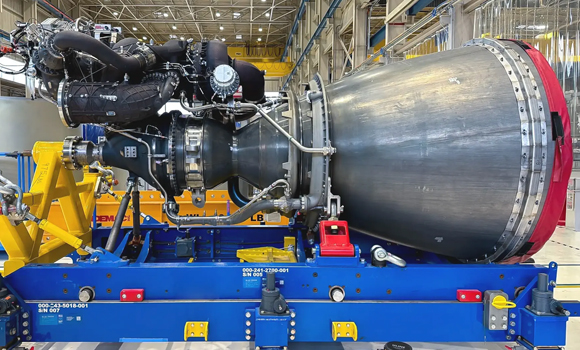
Blue Origin, headquartered in Kent, Washington, USA, has unveiled its new Northstar rocket booster engine, with more than 65% of the engine produced using the company’s in-house large-scale Additive Manufacturing capabilities. Compared with the company’s existing BE-4 engine, Northstar is 30% lighter, has 50% fewer parts and delivers increased thrust.
The new liquid oxygen/liquefied natural gas (LOX/LNG) engine produces 715,000 pounds-force (approximately 3,181 kN) of thrust, compared with the 640,000 pounds-force (2,846 kN) generated by the BE-4.

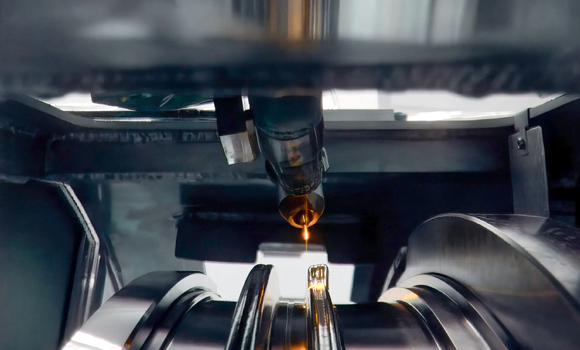
According to Blue Origin, the extensive use of Additive Manufacturing has enabled components to be combined or eliminated, reducing the engine’s mass and complexity while maintaining the durability required for repeated use.
The simplified design is also expected to significantly reduce manufacturing costs. Speaking at the recent UP.Summit conference in Florida, Blue Origin chief executive Dave Limp reportedly indicated that Northstar could be manufactured for approximately 25% of the cost of the company’s existing BE-4 engine.
Manufacturing improvements have also accelerated development, with Blue Origin stating that the Northstar programme progressed from approval to testing in just eleven months.
Despite the changes to its design and manufacturing, Northstar retains the oxygen-rich staged combustion cycle and single-shaft turbopump architecture used in the BE-4. Both engines operate using liquid oxygen and liquefied natural gas as propellants.
Northstar is intended to replace the BE-4 on the first stage of Blue Origin’s reusable New Glenn launch vehicle, which currently uses seven BE-4 engines.