IperionX secures second US Army titanium Task Order
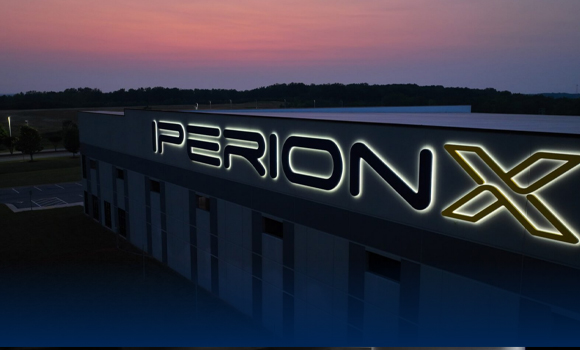
IperionX, based in Charlotte, North Carolina, USA, has announced that the US Army has awarded Task Order 2 under its Small Business Innovation Research (SBIR) Phase III Indefinite Delivery, Indefinite Quantity (IDIQ) contract for Low-Cost, Domestic Titanium for Defense Applications.
The task order has a base value of $18.5 million, of which $11.5 million is currently funded and obligated. A further $6.9 million of unexercised and unfunded options could increase its maximum potential value to $25.4 million if exercised and funded by the US Government.
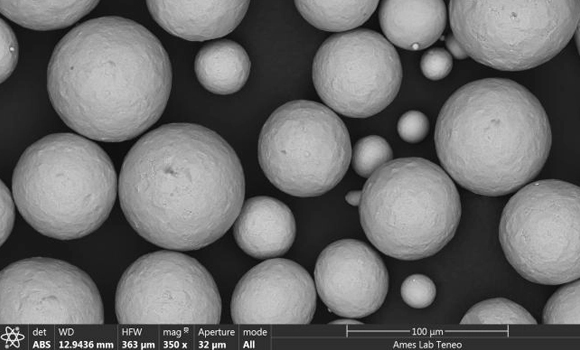
The options include an integrated binder jet and HSPT demonstration for an aerospace-grade titanium component, as well as the recycling of C103 alloy scrap into high-purity powder suitable for Additive Manufacturing or remelting. Further options cover niobium reduction and powder spheroidisation, and scaled production of spherical niobium and C103 powders. C103 is a niobium-hafnium-titanium refractory alloy designed for high-temperature applications, including space and defence propulsion systems. Its use in Additive Manufacturing and Powder Metallurgy depends on access to tightly specified low-oxygen powder feedstock.

IperionX’s SBIR Phase III IDIQ contract enables qualifying US Government agencies to place project-specific orders collectively capped at $99 million. Task Orders 1 and 2 have an aggregate stated value of approximately $19.8 million, with $79.2 million remaining available under the contract ceiling.
The funding will support equipment and manufacturing systems to expand IperionX’s domestic titanium powder-to-part manufacturing capacity. This includes continuous Hydrogen Sintering and Phase Transformation (HSPT) furnace development, centreless grinding and thread-rolling equipment for in-house fastener production, and industrial-scale continuous HSPT and dehydrogenation furnaces.
IperionX’s manufacturing platform combines its Hydrogen Assisted Metallothermic Reduction (HAMR) process, which converts titanium scrap or mineral feedstocks into low-oxygen titanium powder, with HSPT, which consolidates the powder into near-net-shape components with a wrought-like microstructure.
The programme will support production-scale titanium track pins, bolts and fasteners for US Army ground combat applications, with inspection and acceptance planned at Detroit Arsenal and the Army Research Laboratory’s Aberdeen Proving Ground.
Taso Arima, CEO of IperionX, stated, “This second US Army task order represents an important step in scaling IperionX’s titanium powder-to-part manufacturing platform. The SBIR Phase III award aims to advance continuous and industrial-scale HSPT and dehydride capacity and bring titanium fastener finishing fully in-house at our Virginia titanium manufacturing facility. This award aligns with GenX, our next-generation continuous HAMR production platform, which together will provide an integrated American titanium manufacturing system. The programme will expand our capacity to manufacture titanium track pins, bolts and fasteners for the US Army, shorten production lead times and strengthen the domestic titanium manufacturing capabilities required to support US defence supply chains.”
The $6.9 million of potential options cover four line items, subject to US Government exercise, additional funding, technical development and customer qualification. The aerospace component demonstration is valued at $1.0 million; C103 scrap recycling at $1.1 million; niobium reduction and powder spheroidisation at $1.1 million; and scaled spherical niobium and C103 powder production at $3.7 million. The latter two programmes would be undertaken with Global Advanced Metals.
The latest award follows previously announced US Government support for IperionX’s domestic titanium supply chain. This includes $59.8 million of fully obligated reimbursable funding under Defense Production Act Title III and Industrial Base Analysis and Sustainment programmes, approximately 290 metric tons of titanium alloy scrap transferred at no cost, and the initial $1.3 million US Army task order under the SBIR Phase III contract.