Gevorkyan outlines plans to boost Italian plant operations
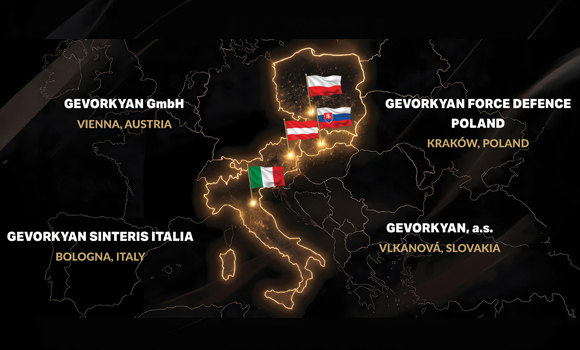
Gevorkyan a.s., headquartered in Vlkanová, Slovakia, has reported that in late June 2026, the management team met with regional representatives of the Italian trade unions FIM and FIOM, together with the Works Council (RSU) at Gevorkyan Sinteris Italia‘s Bologna plant. During the meeting, the parties agreed on priorities for the plant’s further development and committed to ongoing dialogue aimed at improving efficiency and modernising production, while maintaining a stable working environment and high safety standards.
At the meeting, Gevorkyan founder and majority shareholder Artur Gevorkyan outlined the initial measures already implemented to restore the plant’s operations and maximise its production capacity and customer potential. These measures include an audit of production equipment, the reorganisation of manufacturing processes and the introduction of a third production shift, all intended to ensure the efficient fulfilment of customer orders received during the ownership transition.
“We appreciate Italy for the openness of its people, its engineering mindset and its ability to create brands known throughout the world,” stated Gevorkyan. “We are bringing our know-how to the industrial heart of Italy because we are convinced that the Bologna plant has strong foundations, and we therefore want to build a top company in Western Europe. We put our name on it, and we will not back down. The meeting with the Italian trade unions showed that we share common goals and are able to conduct a dialogue based on logic and the priorities of a long-term strategy.”

“I believe that connecting European manufacturing and technological capacities is the only path towards strengthening the competitiveness of European industry against the rest of the world,” he concluded.
In a joint statement issued following the meeting, FIM, FIOM and the Works Council (RSU) stated that there is “a full willingness on the part of the trade unions to take on the challenge of relaunching the Bologna plant and its products, while always placing the protection and central role of employees first throughout the process of further change.”