GKN and Pratt & Whitney target AM for large F135 engine parts
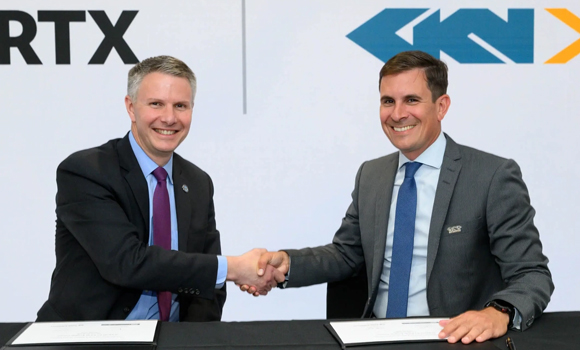
RTX’s Pratt & Whitney and GKN Aerospace have signed a Technology Development Agreement to jointly explore the use of Additive Manufacturing for large structural components for the F135 engine, which powers the F-35 Lightning II.

The agreement, supported by the Norwegian Defence Materiel Agency (NDMA), enables a joint development programme to demonstrate the feasibility of producing a large-scale engine case using Additive Manufacturing
“I am pleased to see this collaboration bringing together strong industrial capabilities and advanced manufacturing expertise. This initiative reflects our ambition to further develop and industrialise additive technologies for demanding aerospace applications,” stated Sébastien Aknouche, Senior Vice President GKN Aerospace.
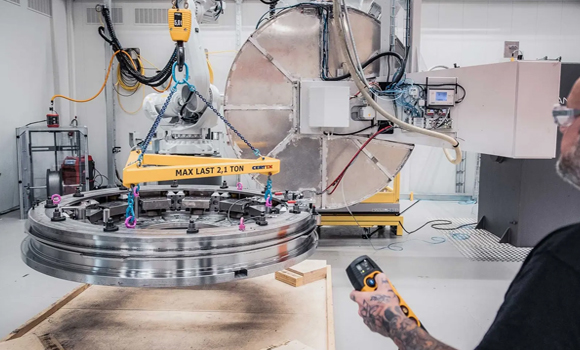
The development work will be led from GKN Aerospace’s facility in Kongsberg, Norway, and will utilise GKN Aerospace’s laser wire Directed Energy Deposition (DED) process, a technology developed and matured over several years. The ambition is to produce a full-scale component while maintaining compatibility and interchangeability with the current engine design.
“This agreement reflects our continued focus on advancing technologies that support the long-term needs of the F135 program,” added Chris Johnson, vice president of the F135 Program at Pratt & Whitney. “We appreciate the collaboration with GKN Aerospace as we explore new manufacturing approaches that contribute to future engine readiness.”
The initiative will represent a significant step forward in applying AM to large-scale, high-performance aero-engine structures. The component is expected to be among the first of its kind at this scale within military engine applications.
Additive Manufacturing has the potential to increase supply chain resilience and improve production processes by reducing lead times, lowering material usage, and increasing overall efficiency. The collaboration will assess these benefits in the context of future aerospace applications.
A first demonstrator component is expected to be ready by 2027, and the product certified by the end of 2028.