Chemically reduced tungsten powder achieves 99.9% density in PBF-EB
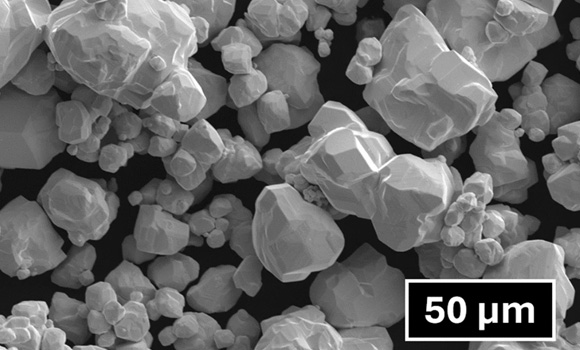
Freemelt AB, based in Mölndal, Sweden, has announced that researchers have processed chemically reduced tungsten into dense material (99.8-99.9%) using a Freemelt ONE Electron Beam Powder Bed Fusion (PBF-EB) Additive Manufacturing machine. This breakthrough, reported in a new open-access paper by Mid Sweden University, UPC Barcelona, Sandvik, Wolfram, and Freemelt, demonstrates the potential for use in high-temperature applications across defence, energy, and MedTech industries.

The study introduced an approach for optimising process development in PBF-EB of non-flowing chemically reduced tungsten powder. Both line- and spot melting strategies were employed, with gradient-based variations of key processing parameters such as beam current and scanning speed (for line melting) and dwell time (for spot melting) applied across both XZ and XY planes using prismatic test specimens. This method allowed for the mapping of the transition from porous to swelling material within a single specimen and exposed the effects of changing gradient directions.

Scripts were developed to analyse swelling and porosity from stacked backscattered electron data, providing insights into material density and defect distribution. Optimal parameters for line melting (1400 W, 115 mm/s) and spot melting (1400 W, 4.5 ms dwell time) were identified, resulting in high-density samples.
Solid samples with densities of 99.8% and 99.9% as measured by the Archimedes method were achieved. Microscopical analysis verified parameter windows with dense, swelling-free material, selected for further builds and detailed characterisation. Microstructural and compositional analysis was conducted using SEM and EBSD, while local micromechanical properties were assessed through microhardness. Scaling of line melting was deemed infeasible due to warping, while spot melting was scaled to a melting area of 50 mm × 50 mm.
The full article, ‘PBF-EB process development of chemically reduced tungsten via a dual-gradient parameter approach utilizing the backscatter signal’ by William Sjöström, Stefan Roos, Carlos Botero, and Lars-Erik Rännar, Mid Sweden University; Lei Zhu and Emilio Jimenez-Pique, Universitat Politècnica de Catalunya; and Arun Balachandramurthi, Freemelt, is available here.