3D Systems and SRNL partner on AM for nuclear energy and national security
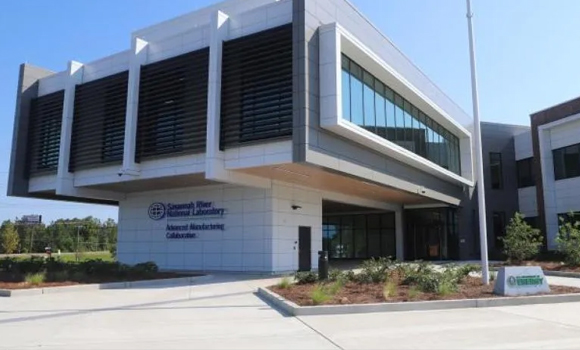
3D Systems Corporation, headquartered in Rock Hill, South Carolina, USA, has entered into a Cooperative Research and Development Agreement (CRADA) with Savannah River National Laboratory (SRNL), based in Aiken, South Carolina, focused on Additive Manufacturing for advanced energy generation and national security applications. The collaboration centres on SRNL’s Advanced Manufacturing Collaborative (AMC), South Carolina’s only national laboratory-operated facility located on a public university campus.
Under the CRADA, SRNL and 3D Systems will jointly pursue developments in materials, equipment, artificial intelligence and machine learning-enabled process optimisation, manufacturing systems, cybersecurity and workforce development training. The work will include the development of AM materials, real-time process optimisation tools and scalable production solutions, alongside training intended to support the adoption of advanced manufacturing technologies.

“We look forward to partnering with SRNL at the Advanced Manufacturing Collaborative and deploying 3D Systems’ leading AM technologies,” said Jeff Graves, President and CEO of 3D Systems. “This agreement demonstrates the impact and importance of high-quality 3D printing materials and technologies on key industrial markets, particularly energy and national security, and on developing the skilled workforce those markets require.”
A primary focus of the collaboration will be the application of Additive Manufacturing to energy-related challenges, particularly nuclear energy and wider energy infrastructure. The work will consider the production of complex components from advanced alloys that are difficult or impossible to produce by conventional methods. These include high-temperature nickel-based superalloys and other radiation-tolerant materials for components such as heat exchangers with internal cooling channels, reactor internals, pumps, and valves used in advanced nuclear systems.
The partners state that these capabilities could support improved performance under extreme conditions, reduced material waste, greater design freedom and increased supply-chain resilience. Potential applications include advanced nuclear reactor systems, fusion energy technologies, power generation equipment and US energy infrastructure modernisation.
The agreement coincides with a period of renewed investment and development in the US nuclear and energy sectors. Advanced reactor designs, small modular reactors (SMRs) and related energy initiatives are increasing demand for manufacturing approaches intended to shorten development cycles, reduce costs and strengthen domestic production capacity.
The collaboration also coincides with projected growth in advanced nuclear capacity worldwide. According to the International Energy Agency, SMR capacity could reach around 40 GW under current policies or up to 120 GW under accelerated scenarios by 2050. The projected growth is linked to demand for reliable, low-carbon power for applications including data centres, industrial heat, grid stability and energy security.
The collaboration combines 3D Systems’ commercial AM platforms and materials expertise with SRNL’s knowledge of nuclear materials, environmental stewardship and energy resilience, with the aim of moving research towards industrial application.
“This collaboration positions SRNL and 3D Systems to deliver groundbreaking Additive Manufacturing technologies, strengthen US manufacturing competitiveness, and drive forward the next era of AM innovation,” explained Roderick Jackson, associate laboratory director for science, energy and innovation at SRNL.
The CRADA is intended to provide a pathway from foundational research through technology transfer to commercial application. 3D Systems equipment has been installed at the AMC, supported by facility upgrades and resident AM subject-matter experts. The infrastructure will support research and the demonstration of processes intended for production, with the partners seeking to develop scalable manufacturing solutions for applications including nuclear energy, aerospace and defence, and environmental technologies.
“This agreement underscores SRNL’s commitment to building world-class research capabilities, leveraging partnerships to enhance its competitive edge and solidify its presence as a leader in AM technologies,” stated G Jeremy Leong, director of the Advanced Manufacturing Collaborative at SRNL.