Westinghouse secures $7 million ARPA-E funding to develop additively manufactured nuclear fuel
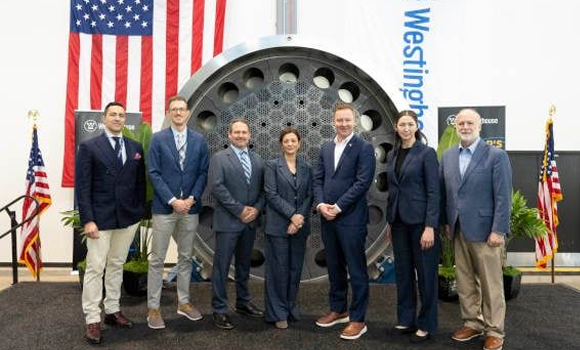
Westinghouse Electric Company, Cranberry Township, Pennsylvania, USA, has been selected to receive funding from the US Department of Energy’s Advanced Research Projects Agency-Energy (ARPA-E) under its High-performance Optimized Recycled Nuclear Isotopes for Gen IV reactors (HORNIG) programme. The funding will support further development of Westinghouse’s PowerBlock nuclear fuel technology.
According to ARPA-E, the $7 million project will develop an Additive Manufacturing process using Laser Beam Powder Bed Fusion (PBF-LB) to produce metallic nuclear fuel. The team will combine computational modelling with Additive Manufacturing to optimise fuel design and production, enabling scalable manufacturing of metallic fuels for both the current fleet and advanced reactors.
PowerBlock is designed to improve conventional nuclear fuel assemblies, targeting 24-month fuel cycles at thermal power levels exceeding 4,200 MW. The technology combines new fuel architectures with advanced manufacturing techniques intended to improve fuel performance and operational flexibility.
Ben Solich, President of Nuclear Fuel at Westinghouse, said utilities are looking for ways to “maximise output, extend fuel performance and improve plant economics”.
The ARPA-E funding will support continued development of PowerBlock and the generation of technical data to inform its future evaluation and potential deployment.