Farsoon debuts FS621M-Cu large-scale copper Additive Manufacturing machine
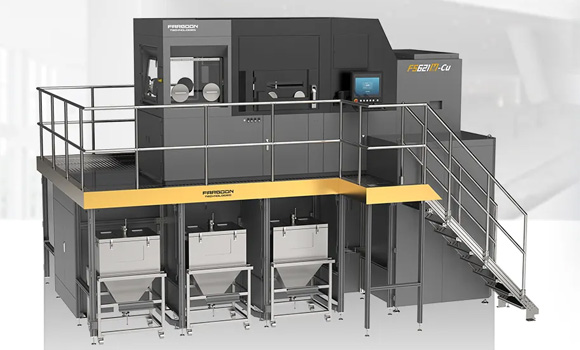
Farsoon Technologies, based in Changsha, China, has introduced the FS621M-Cu Additive Manufacturing machine. Based on the large-format FS621M, the FS621M-Cu integrates four 1000 W ytterbium fibre lasers (1060–1080 nm) to achieve stable, long-duration Additive Manufacturing of highly reflective materials like CuCrZr.
With a build envelope 620 x 620 x 1,100 mm, the new FS621M-Cu machine is expected to enable the production of large, complex components that may have previously been considered unfeasible.
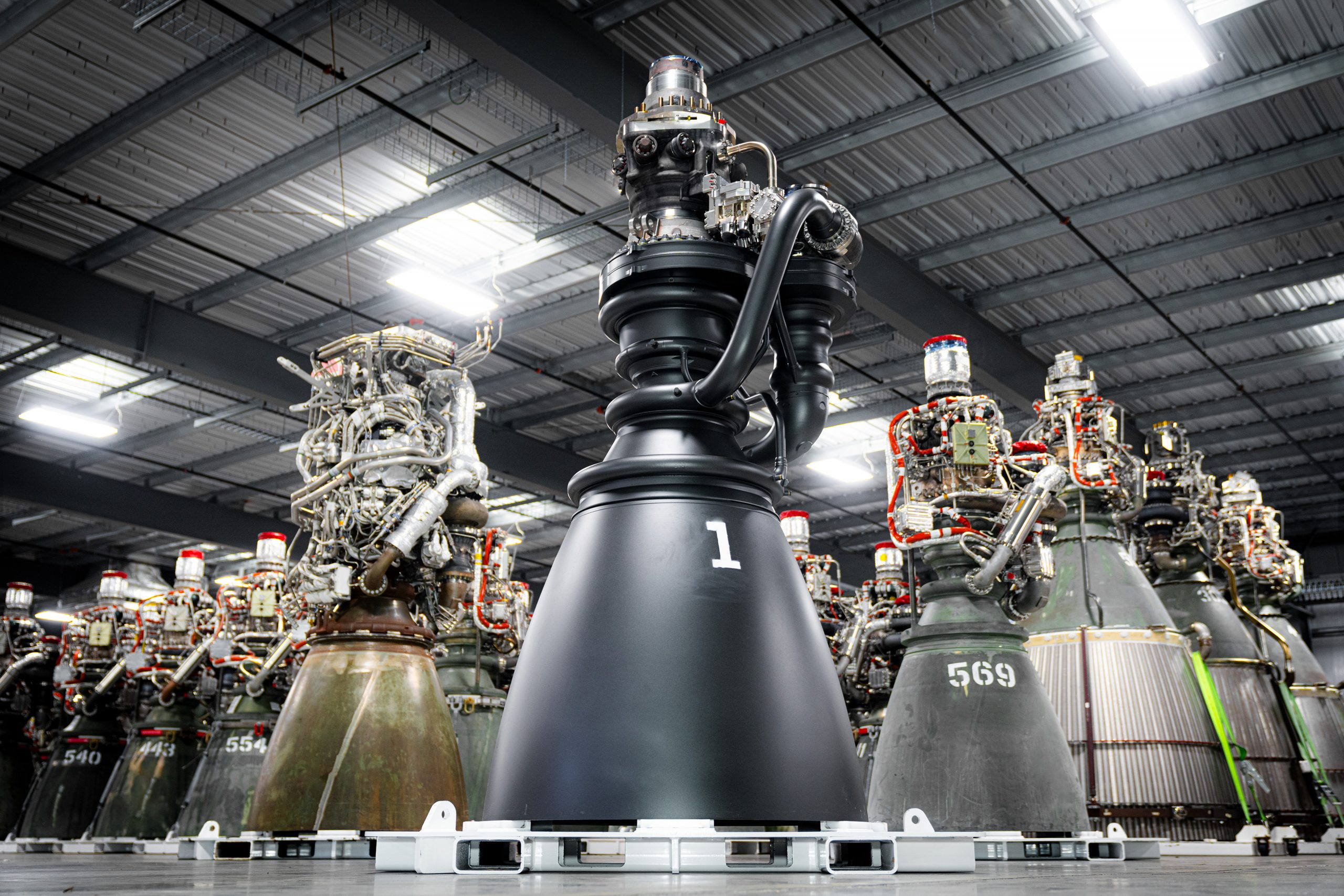
As an example of the capability of the new machine, Farsoon discussed the development of a copper thrust chamber for a liquid rocket engine. The critical component must withstand extreme temperatures, pressures, and vibrations while maintaining precise regenerative cooling channels.
Traditional manufacturing relies on labour-intensive processes like spinning, machining, and brazing, which incur high costs and extended lead times.
Farsoon explains that copper and copper alloys are used in aerospace engine combustion chambers because of their outstanding electrical and thermal conductivity, corrosion resistance, and ductility. Yet their high reflectivity, especially prevalent with 1,064 nm near-infrared lasers often used in PBF-LB, has hindered their widespread adoption in Additive Manufacturing.

Farsoon’s FS621M-Cu machine is reported to be able to monolithically additively manufacture copper alloy thrust chamber liners with optimised cooling channels. This approach can eliminate assembly steps, enhance heat transfer efficiency, and improve engine performance while reducing production costs and slashing development cycles.
An aerospace customer of Farsoon used the FS621M-Cu platform to produce a 600 × 850 mm thrust chamber liner. Testing was said to have confirmed near-theoretical density (8.86 g/cm³), a pore-free microstructure, and thermal conductivity exceeding 345 W/(m·K). X-ray scans further validated the precision of internal cooling channels, which were polished post-build to minimise pressure drop and maximise engine efficiency.