Materialise calls for coordinated European AM network to support defence production
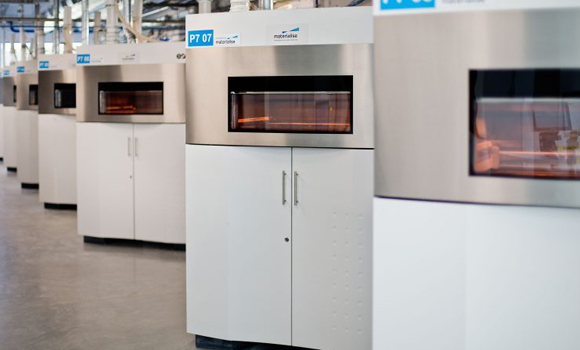
Materialise, Leuven, Belgium, has called on European defence manufacturers and policymakers to coordinate existing Additive Manufacturing capabilities to support defence production. Speaking at the AM Innovation and Standards Summit, held ahead of Formnext 2026, Materialise argued that Europe already has the necessary expertise, technology and industrial production capacity, but lacks the coordination needed to establish a strategic defence manufacturing network.
As Europe seeks to strengthen its defence industrial base, Materialise believes the challenge extends beyond increasing production volumes. Conventional manufacturing can be constrained by long lead times, dedicated tooling and limited flexibility, while defence technologies and operational requirements continue to evolve. AM could help address these challenges by providing flexible, on-demand production capacity that can accommodate design changes and respond more quickly to emerging requirements.

“Europe already has the expertise, technology and production capacity to strengthen its defence manufacturing capabilities,” stated Bart Van der Schueren, Chief Strategy and Technology Officer at Materialise. “The challenge is to connect these resources and make them available as a coordinated industrial network. This requires action from both industry and policymakers to build a manufacturing capability that can respond not only to today’s production needs, but also to the speed at which defence technology continues to evolve.”
The company highlighted drone and counter-drone technology as an example of the need for adaptability. As these systems evolve, large inventories of fixed designs risk becoming outdated before deployment. AM could allow manufacturers to incorporate design changes and bring updated components into production more quickly, making adaptability as important as production volume.
Coordinated action from industry and policymakers
Materialise has identified two areas requiring action.
First, it is calling on European defence manufacturers to integrate AM into their industrial production strategies, rather than limiting its use to individual spare parts or emergency supply-chain requirements. The company believes AM should be considered as a source of flexible, scalable production capacity that can adapt rapidly to changing requirements.
Second, Materialise is urging European governments and institutions to establish a common framework that would allow AM capacity to operate across companies and national borders. This would require shared approaches to standards, qualification, security and digital production processes, alongside greater harmonisation of export control regulations, to enable individual production resources to operate as a distributed manufacturing network.

Digital infrastructure for distributed manufacturing
According to Materialise, connecting Europe’s AM capacity would require more than access to production equipment and facilities. A distributed manufacturing network would also need digital infrastructure to manage production workflows, maintain traceability, protect sensitive design information and ensure that parts are manufactured to the required specifications.
Materialise points to its industrial AM production experience and software technologies as potential contributors to such a network. Its CO-AM software ecosystem supports the management and integration of AM workflows, enabling manufacturers to coordinate production processes while maintaining operational visibility and traceability.
The company’s Identify3D technology provides additional capabilities for securing digital manufacturing data and controlling how manufacturing instructions are used in distributed production environments.
Materialise believes these technologies could help connect manufacturing resources across Europe, supporting the secure and controlled production processes required for a coordinated defence manufacturing network.