Czinger expands metal Additive Manufacturing in new 21C Spyder
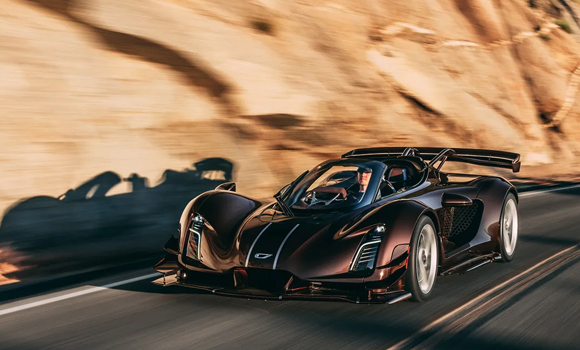
Czinger Vehicles, headquartered in Los Angeles, California, USA, has unveiled the 21C Spyder, an open-top variant of its 21C hypercar that extensively uses metal Additive Manufacturing.
According to the company, 23% of each vehicle is additively manufactured using processes developed by its sister company, Divergent Technologies, Torrance, California. These components form part of the vehicle’s chassis, suspension, braking system, powertrain and interior.

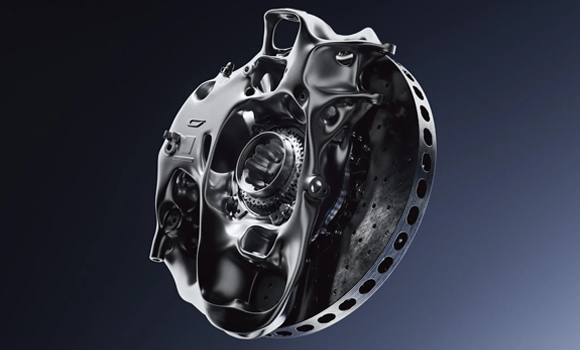
Among the most significant new applications is BrakeNode, described by Czinger as the world’s first fully integrated, topology-optimised, additively manufactured brake assembly. Produced from the company’s proprietary Z301 aluminium alloy, BrakeNode combines the suspension upright, brake calliper and internal hydraulic fluid passages in a single structure. Czinger states that, compared with conventional brake structures, the design can reduce unsprung mass and increase stiffness by up to 30%. Replacing the existing additively manufactured suspension upright further reduces total vehicle unsprung mass by 2.7 kg. The component has reportedly been tested at pressures of up to 500 bar.
“We started Czinger to build the next era of automotive performance,” stated Lukas Czinger, founder and CEO of Czinger Vehicles. “Not a faster version of cars that have come before, but something fundamentally new. A hypercar designed from the ground up and built using technology the automotive world had never seen. That car is the 21C, and with 21C Spyder, we’re going even further, amplifying the driver’s connection to the car, debuting world-first technology, and introducing an all-new cockpit experience. The 21C Spyder delivers a drive with no equal.”
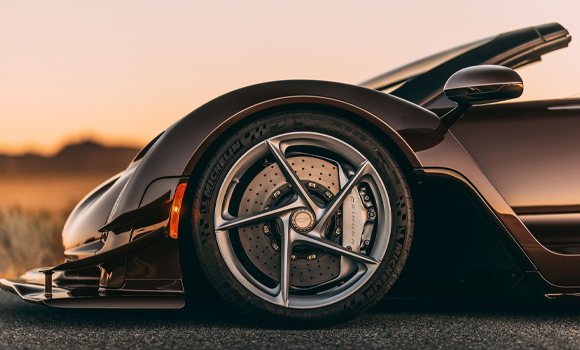
Metal Additive Manufacturing is also used throughout the wider vehicle architecture. Czinger states that additively manufactured components in its BioLogic Chassis include the MegaNode front structure, side and rear crash structures, rear subframe and suspension components. AM is also used for the vehicle’s control arms, gearbox casing, exhaust and intake manifolds, catalyst assembly and thermal-management system. Within the cockpit, the Spyder adds an additively manufactured steering wheel, phone and key mounts, speaker grilles and other metal components, while its NeuralNode dashboard incorporates hollow internal channels to route air from the HVAC system to the cabin vents.

The 21C Spyder combines Czinger’s 750 hp, 2.88 litre twin-turbocharged V8 with three electric motors for a stated combined output of 1,250 hp. The vehicle has a reported dry weight of 1,620 kg and will be limited to thirty examples, each assembled at Czinger’s Area 21 production facility in Los Angeles. Prices start at $2.75 million.
Want to know more about Czinger’s use of metal Additive Manufacturing? Take a deeper look at how the Czinger 21C was developed, and how metal AM and Divergent’s manufacturing technology have enabled many of its most distinctive structural and performance-focused components, in our in-depth feature ‘Metal AM in automotive: How the Czinger 21C is redefining next-generation car manufacturing’.