Coogee Titanium and partners to assess TiRO powder for Additive Manufacturing
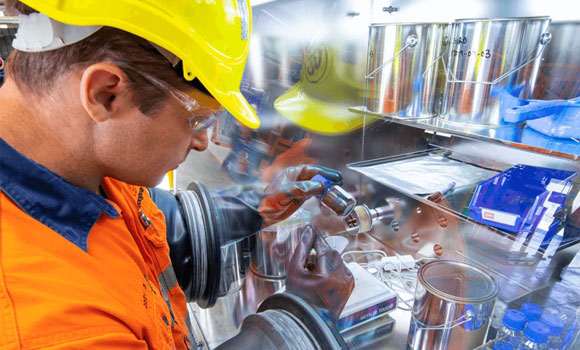
Coogee Titanium, based in Laverton North, Australia, has partnered with the University of Queensland (UQ) and the Additive Manufacturing Cooperative Research Centre (AMCRC) to evaluate whether TiRO powder, produced locally by Coogee, is suitable for producing titanium components by Additive Manufacturing and other advanced manufacturing processes.

The TiRO process (Titanium Recovery from Oxide) is an advanced method developed by the Commonwealth Scientific and Industrial Research Organisation (CSIRO) for the continuous, direct production of titanium powder.
The AU$677,000 research project aims to support the development of an Australian titanium supply chain by assessing the material’s technical performance and identifying applications where it may offer economic and environmental benefits.
“This project is about proving that TiRO powder can meet the performance demands of advanced manufacturing while delivering cost and sustainability benefits,” explained Peter Duxson, Technical Director at Coogee Titanium. “We’ve developed a unique production process and invested in multiple facilities here in Australia, and this research will help unlock its full commercial potential across both domestic and international markets.”
Researchers will benchmark TiRO powder against commercially available titanium powders used in Additive Manufacturing, including gas-atomised and hydride-dehydride (HDH) feedstocks. The study will examine how trace impurities, including magnesium and chlorine, affect microstructure and the mechanical properties of manufactured components.
Material performance will be evaluated using Laser Beam Powder Bed Fusion (PBF-LB) Additive Manufacturing and Hot Isostatic Pressing (HIP). The research will assess the applications in which TiRO powder can compete with established titanium feedstocks.
“Understanding how this new titanium powder behaves during manufacturing is essential,” stated Professor Michael Bermingham, project lead at UQ. “By comparing it directly with established materials and studying the role of impurities, we can determine whether it is suitable for producing high-quality, reliable components.”
Simon Marriott, Managing Director of the AMCRC, added, “This collaboration highlights the importance of connecting industry and research to accelerate innovation. Developing a competitive, locally produced titanium feedstock has the potential to transform Australia’s Additive Manufacturing ecosystem and reduce reliance on imported materials.”