China’s AVIC produces aircraft structure exceeding five metres using metal Additive Manufacturing
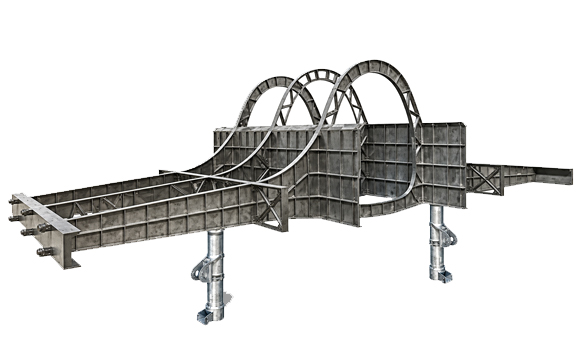
The Aviation Industry Corporation of China (AVIC) has reported advances in the development of large-scale, load-bearing aircraft structures using metal Additive Manufacturing, including the production of an integrated structural component measuring more than five metres in length.
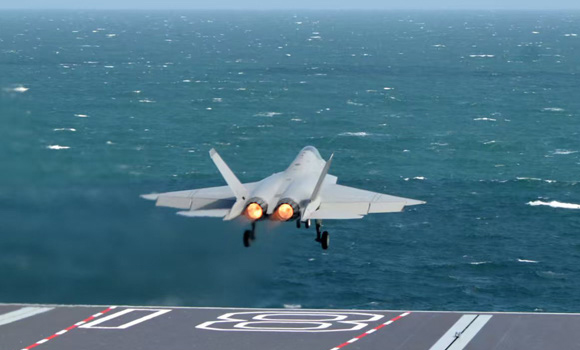
In an announcement published on November 16, 2026, AVIC detailed developments at the Key Laboratory of Aviation Science and Technology for Novel Aircraft Structures, part of its Shenyang Aircraft Design and Research Institute, China. The institute is responsible for the development of several Chinese military aircraft, including the J-15 and J-35 fighter jets.
The large-scale component is a primary load-bearing structure designed for the central fuselage of an aircraft. Traditionally, large aircraft structures are manufactured using subtractive manufacturing processes followed by mechanical assembly. The numerous connecting elements and fasteners associated with this approach increase component weight, while fastening holes can be susceptible to fatigue cracking.
The research team developed a process in which individual sections were additively manufactured before being joined using an additive fusion process. AVIC described the use of Laser Beam Powder Bed Fusion (PBF-LB) at the laboratory but did not disclose the specific Additive Manufacturing process or alloy used to produce the large-scale component.
The laboratory has also adopted a building-block approach to the validation of large, load-bearing structures, progressing from material and process characterisation to testing representative structural features and full-scale static testing.
According to AVIC, the use of Additive Manufacturing enables greater structural integration, reducing the number of individual components and mechanical connections required, with the potential to reduce weight and extend service life.
Multifunctional heat exchanger
The laboratory has additionally developed an additively manufactured multifunctional annular heat exchanger for aircraft air intakes, incorporating heat transfer, bleed air, load-bearing and maintenance functions within a single component.
Conventionally manufactured annular heat exchangers are produced by welding thin metal sheets, limiting the geometry of their internal flow channels. Additive Manufacturing enabled the researchers to incorporate more complex internal geometries, increasing the heat transfer surface area whilst reducing component weight.
To address internal surface roughness and the limitations of conventional finishing processes, the team developed a dedicated magnetic grinding system for the component’s internal channels.
Following multiple iterations of design, prototyping and testing, the heat exchanger successfully passed cyclic loading life tests, AVIC reported.
Wider adoption of Additive Manufacturing
Over more than twenty years of research and development, the laboratory has reportedly used six Additive Manufacturing processes and thirteen metallic materials in the production of nineteen categories of structural components across aircraft development programmes and projects. Applications range from smaller secondary load-bearing components to primary structural elements, heat exchangers, access ladders, ducts and supports.