Green-laser DED Additive Manufacturing strengthens AA7075
Researchers at Soochow University, China, together with Singapore’s Agency for Science, Technology and Research (A*STAR) and China’s Shanghai Jiao Tong University, Dongguan University of Technology and City University of Hong Kong, have developed a green-laser Directed Energy Deposition (DED) approach for processing high-strength AA7075 aluminium alloy. Following heat treatment, the researchers report achieving a tensile yield strength up to 591 MPa, exceeding the reference value for conventionally forged AA7075.
High-strength 7xxx-series aluminium alloys are challenging to process using conventional infrared laser Additive Manufacturing due to their low laser absorptivity and susceptibility to solidification cracking. The high processing temperatures required can also cause the evaporation of alloying elements, limiting the precipitation strengthening achievable through subsequent heat treatment.
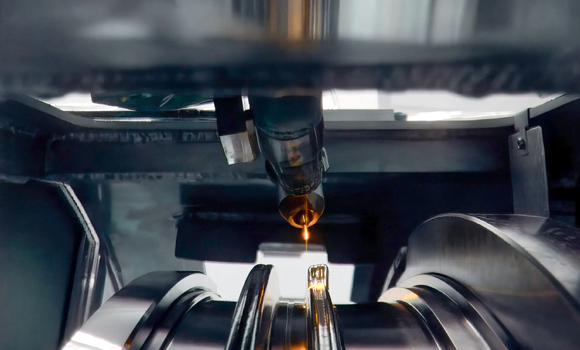
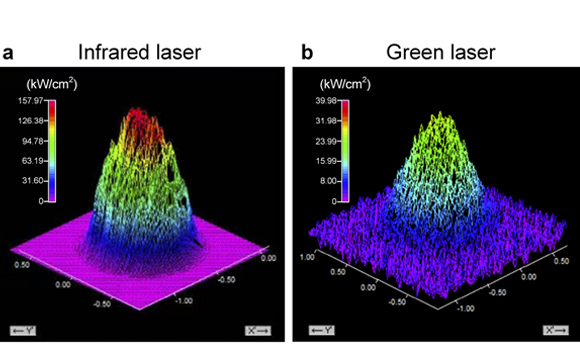
To address these challenges, the researchers combined green-laser DED with a composite AA7075 powder containing embedded titanium carbide (TiC) nanoparticles. The shorter-wavelength green laser provided improved energy absorption, enabling deposition at lower laser powers than conventional infrared systems, while the TiC nanoparticles helped refine the grain structure and suppress cracking.
According to the study, the green laser also improved melt pool stability, reduced thermal gradients and limited the evaporation of alloying elements. This resulted in a more uniform grain structure with lower dislocation density.
Following T73 heat treatment, the deposited material developed a high density of nanoscale η′ precipitates and Guinier–Preston (GP) zones, reported at approximately 2.13 × 10¹⁶ m⁻². These strengthening features contributed to a tensile yield strength of up to 591 MPa.
The researchers compared this result with a reported yield strength of 497 MPa for forged AA7075, as well as values for previously reported aluminium alloys processed by laser DED. However, the highest-strength specimens exhibited an elongation of approximately 2.9%, compared with 12.7% for the forged reference. Another green-laser processing condition achieved a yield strength of 543 MPa with 5.5% elongation, demonstrating a different balance between strength and ductility.
The researchers believe that combining short-wavelength lasers with modified powder feedstocks could provide a route to processing highly reflective, crack-susceptible alloys using Additive Manufacturing.
Ultrahigh strength aluminum alloy by green laser additive manufacturing, published in Nature Communications, is available here.